 Jenna Ariza
City of Midland, TX '24
Midland Police Department
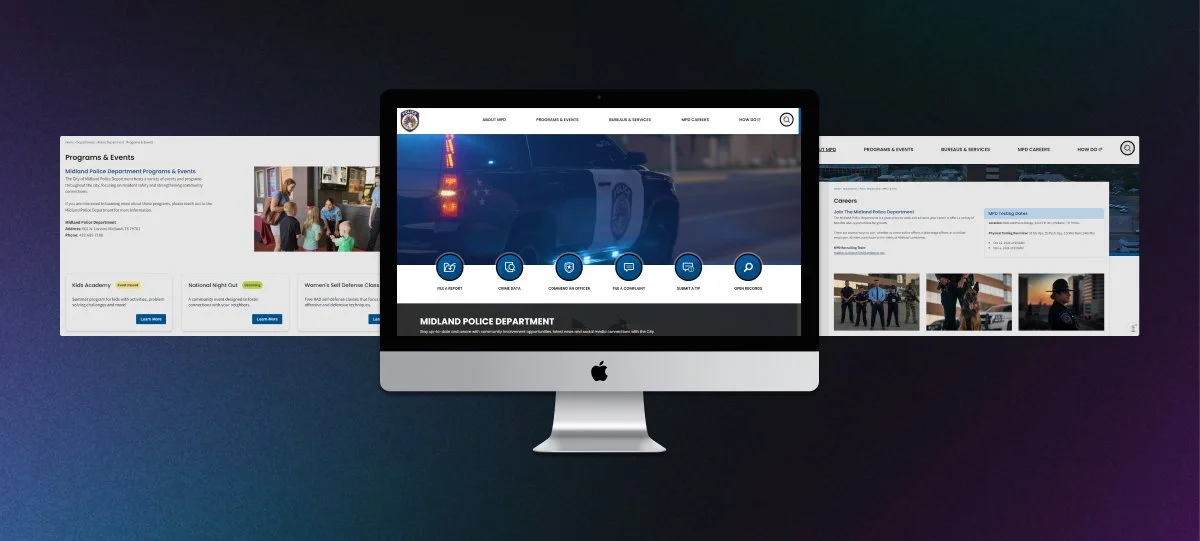
Refined content, layout, and application flows to boost community engagement and accessibility on the MPD site.
Role
UI/UX Designer
Duration
1 – 2 Months
Tools
Figma / Figjam · Google Analytics / MS Forms · Civic Plus Engage
Overview
An improvement of Midland's MPD website through content refinement, layout optimization, and streamlined application processes — using a user-centered design approach to enhance accessibility, showcase recruitment, and boost community engagement while ensuring the site is intuitive, clear, and aligned with user needs.
Problem
Midland's MPD website faced issues with outdated content, a confusing layout, and inefficient application processes, which negatively impacted accessibility and user engagement. Visitors found it difficult to locate key information, and the site failed to effectively showcase MPD's recruitment efforts and essential services.
Process
Reviewed the existing site, mapped the sitemap in FigJam, ran empathy mapping, launched an internal officer survey, held a workshop with the recruitment team, built archetypes and a service blueprint, then rebuilt the IA and content in Civic Plus Engage.
Outcome
A clearer, more accessible MPD experience with a new MPD Careers dropdown, refreshed recruitment content, and a revised sitemap aligned with resident needs and internal recruitment goals.
🔍 Website Review
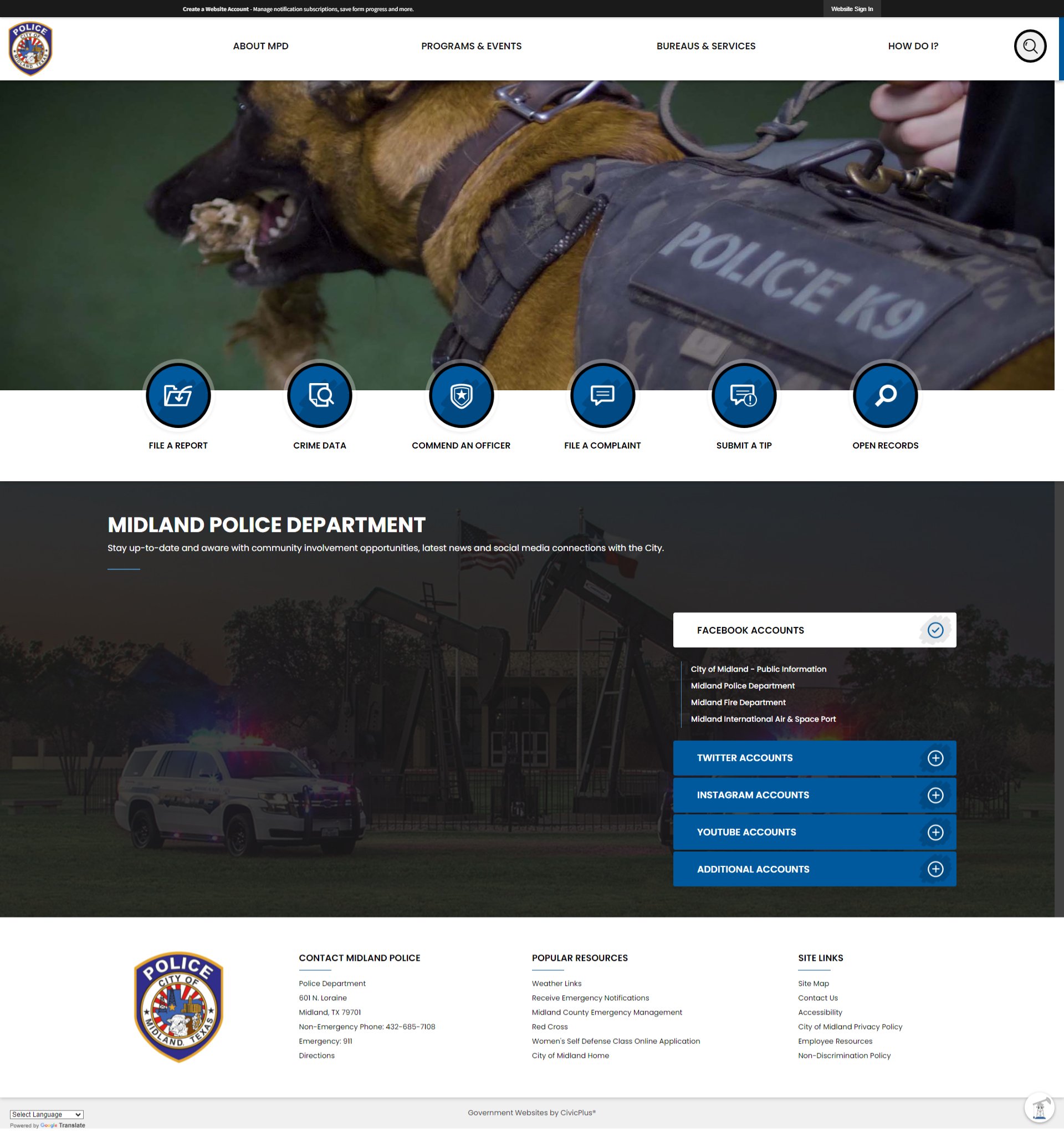
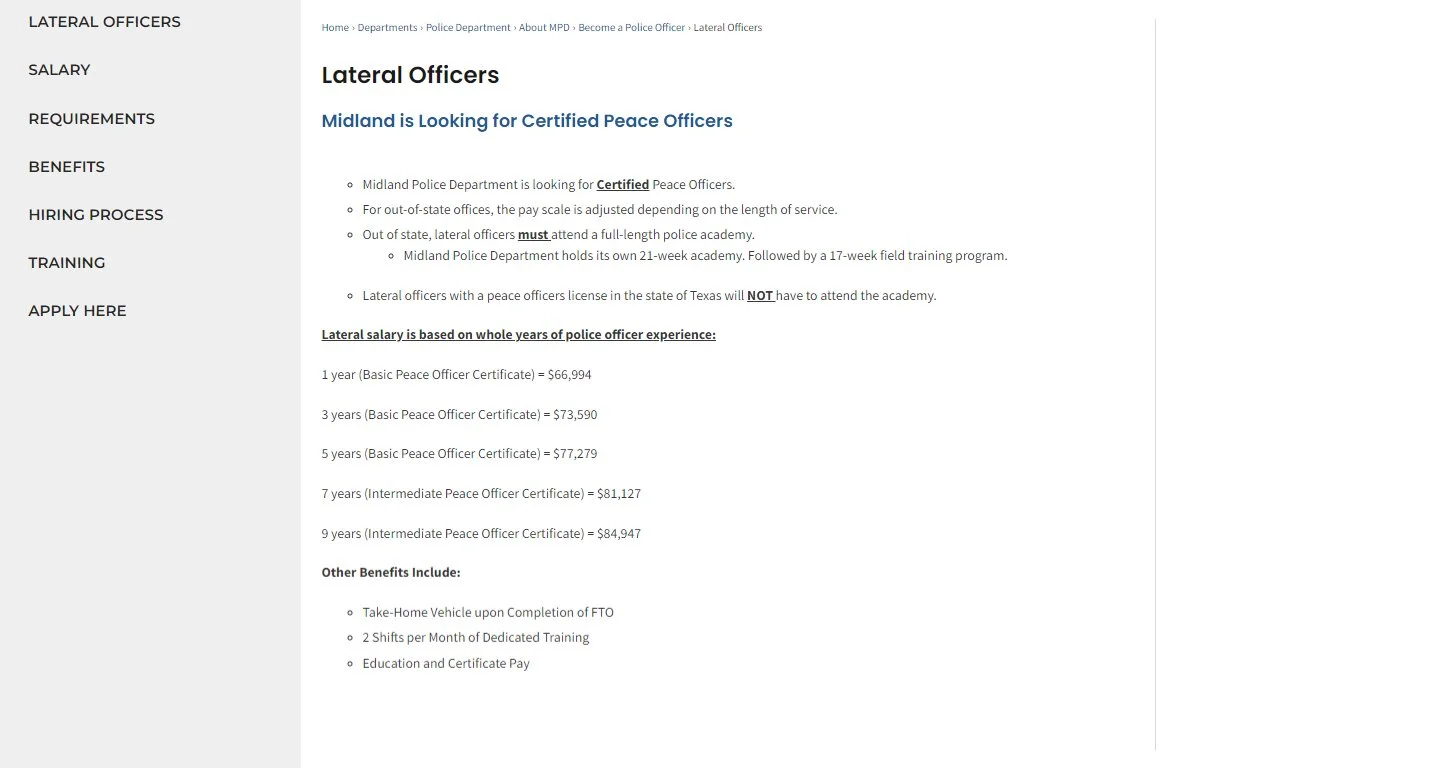
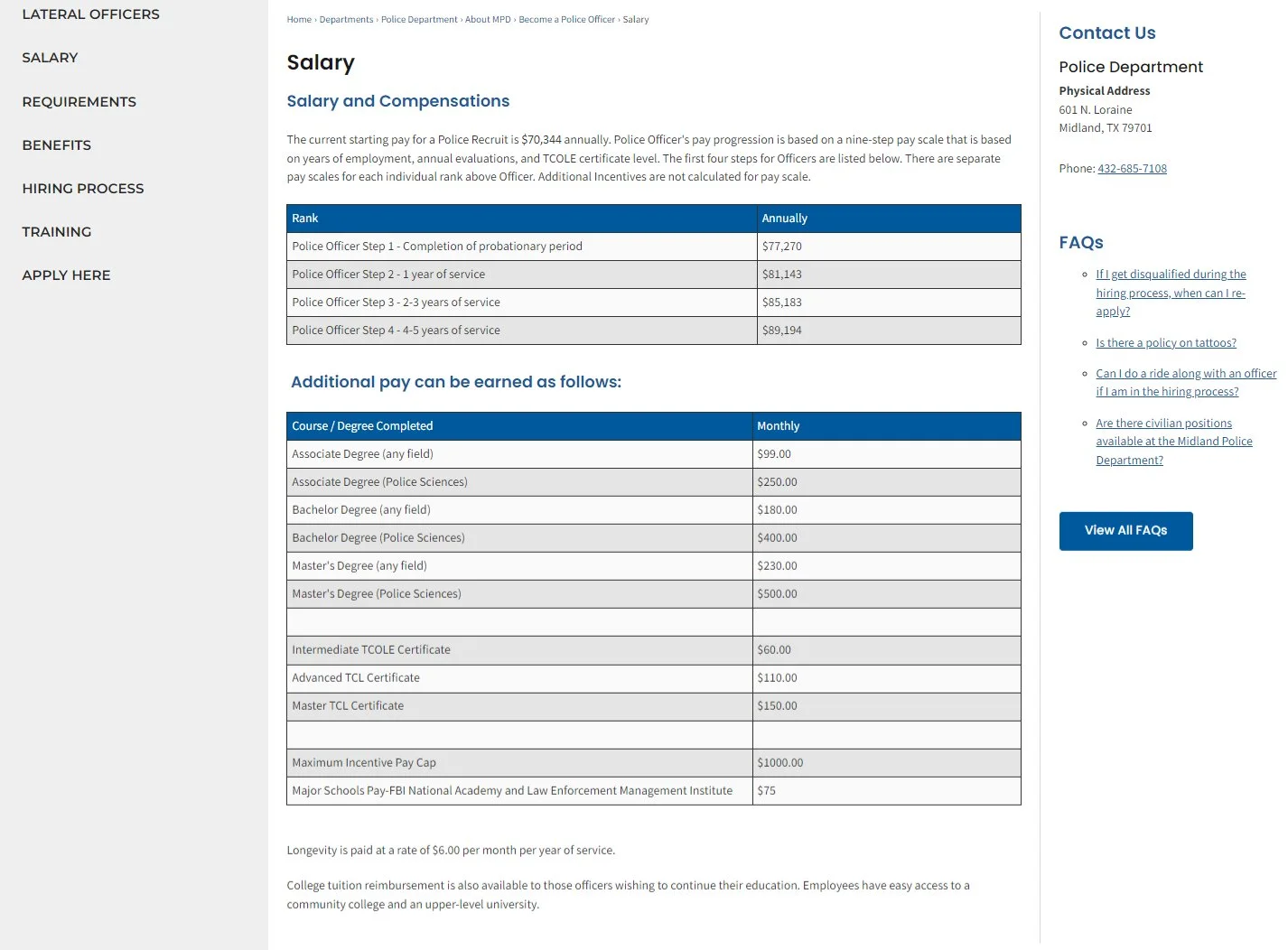
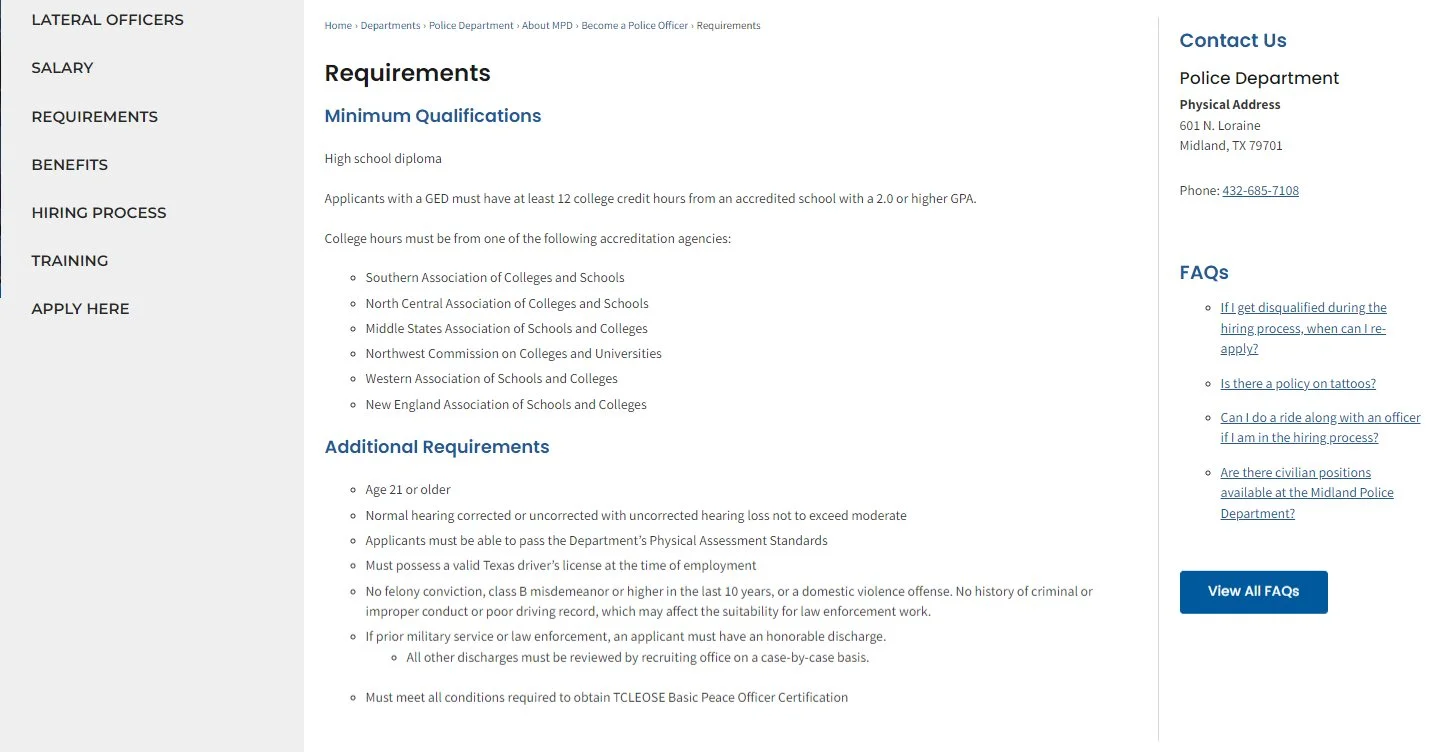
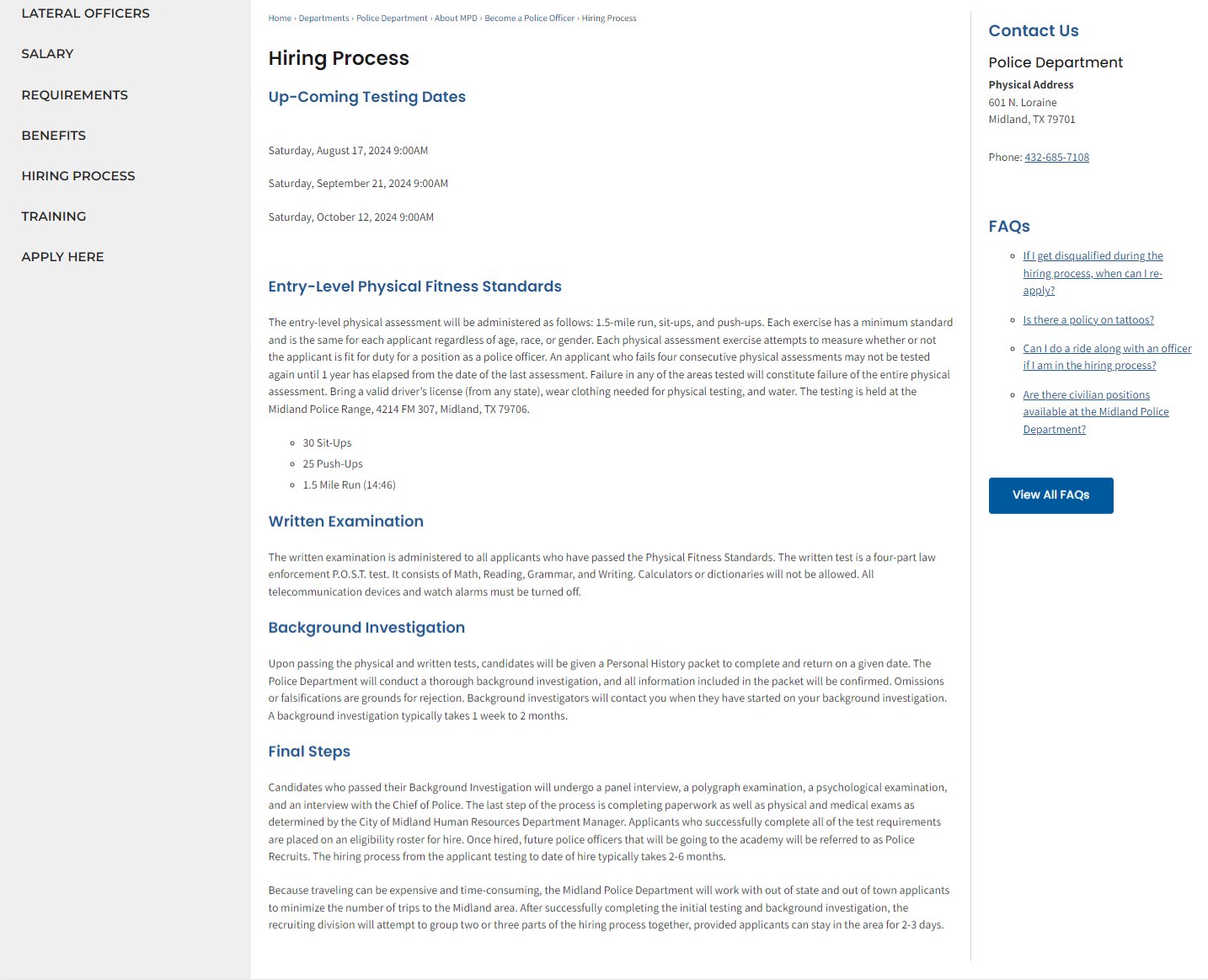
Our UX team was assigned to lead this project. We began by conducting a thorough review of the existing website, identifying key layout issues and usability concerns before meeting with stakeholders. Initially, we were tasked with refining the website's content, with flexibility to introduce new elements that would improve user understanding and engagement. It was also noted that MPD wanted to prominently feature career opportunities on the website.
Below are several screenshots showcasing the original state of the website:
🔽 Breakdown of Dropdowns
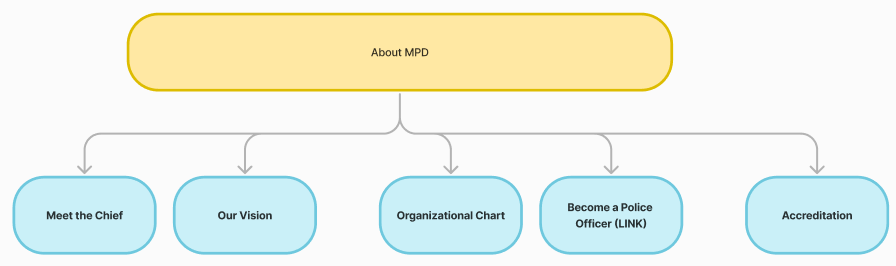
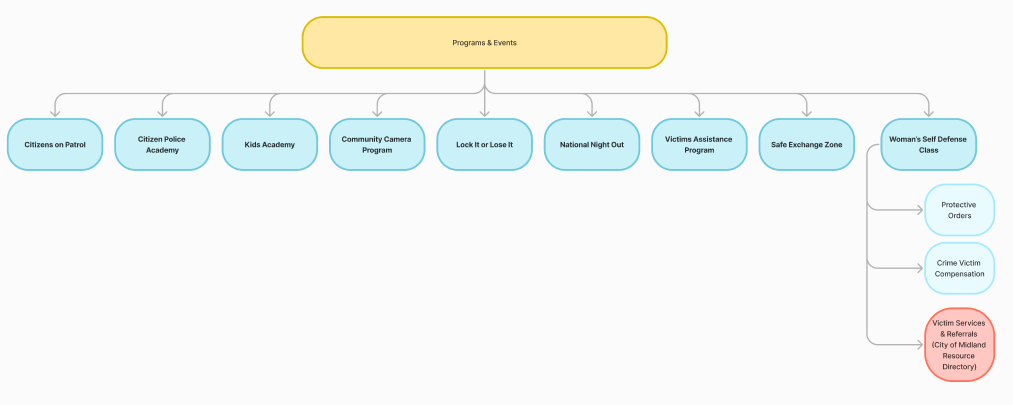
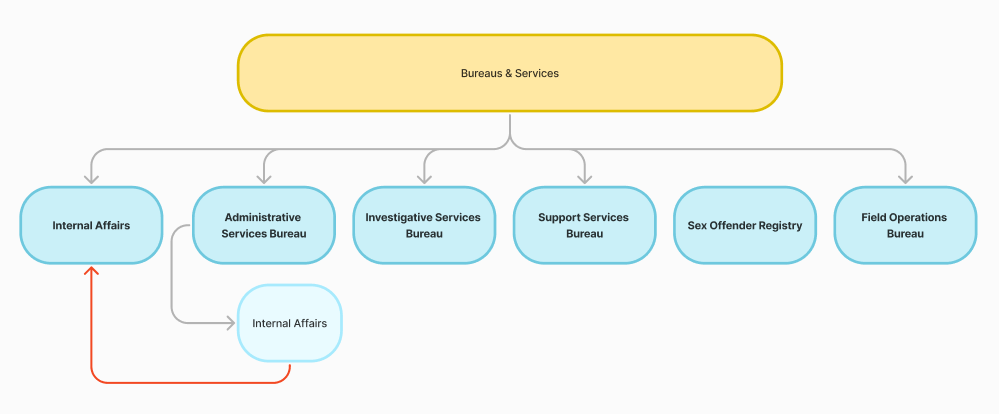
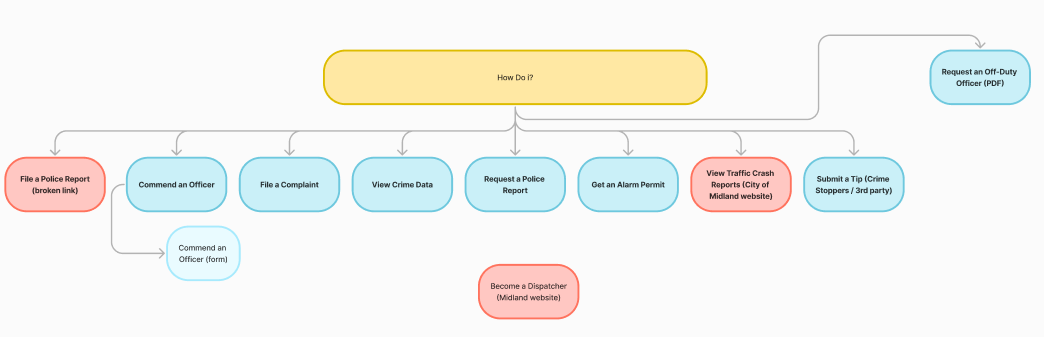
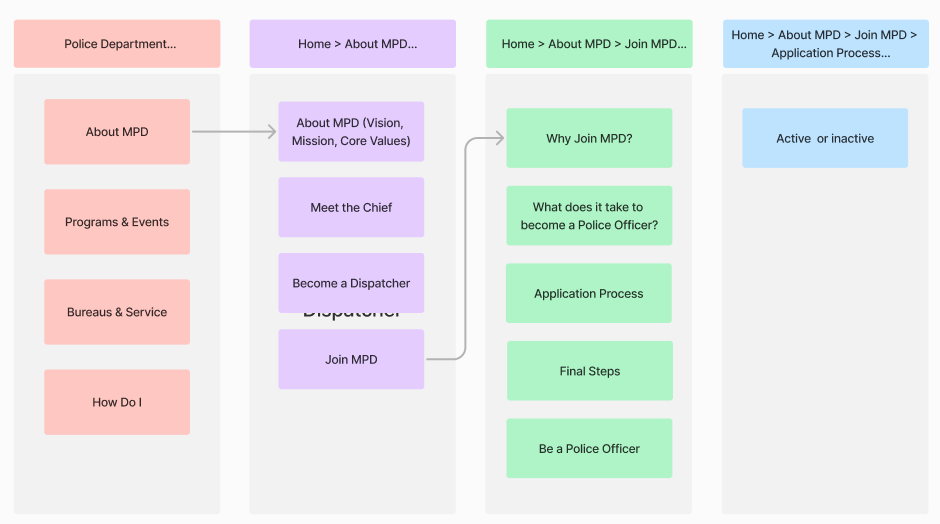
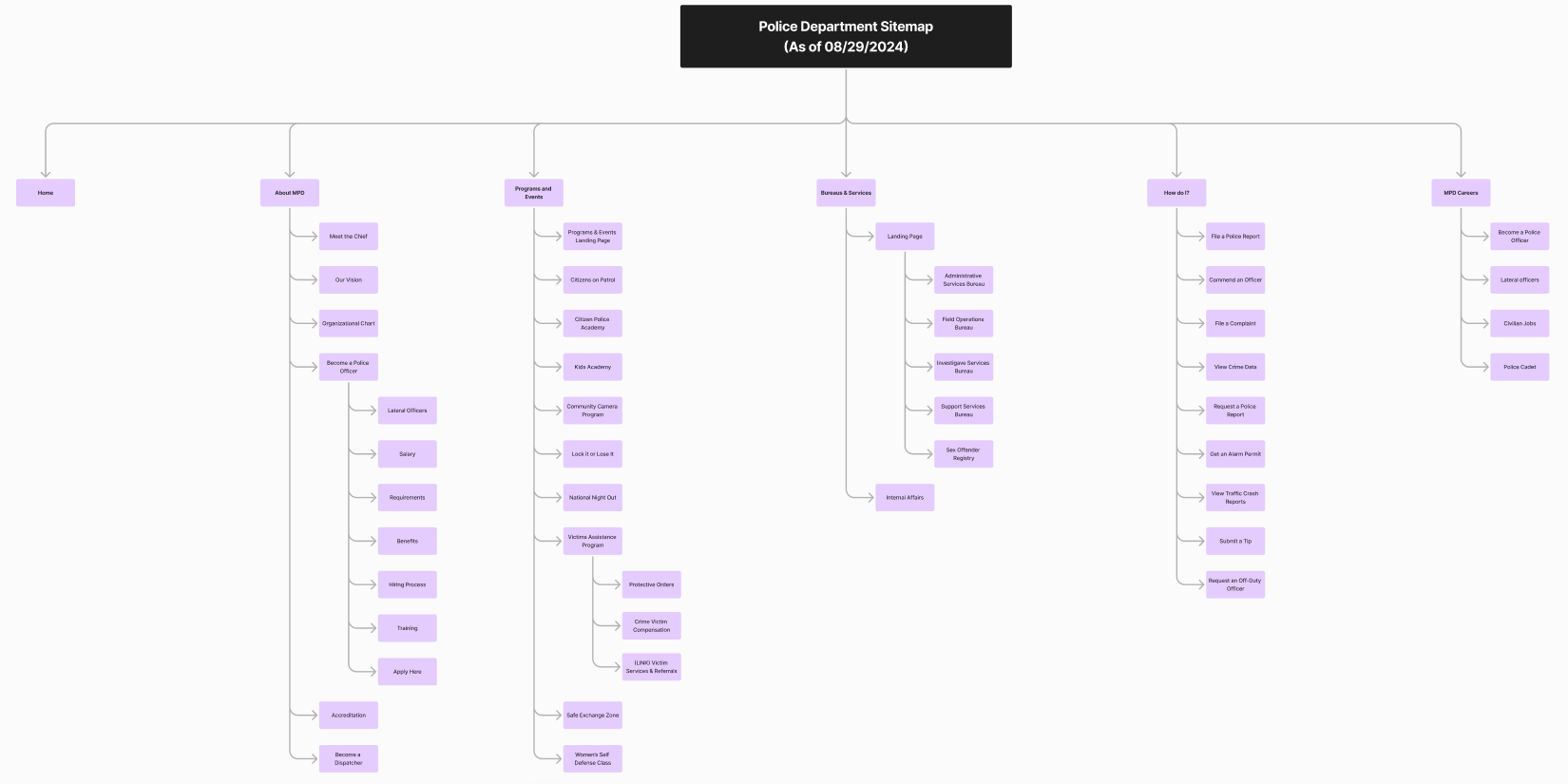
As a team, we prioritized improving the visual hierarchy of the MPD website. Using FigJam, we collaboratively mapped out the existing sitemap to gain a clearer understanding of the current content organization. This process allowed us to identify how pages were structured under each dropdown menu and highlight opportunities for better content flow — ensuring users could easily find the information they needed while maintaining a clean and logical layout.
🪜 Strategic Planning
Identify Needs
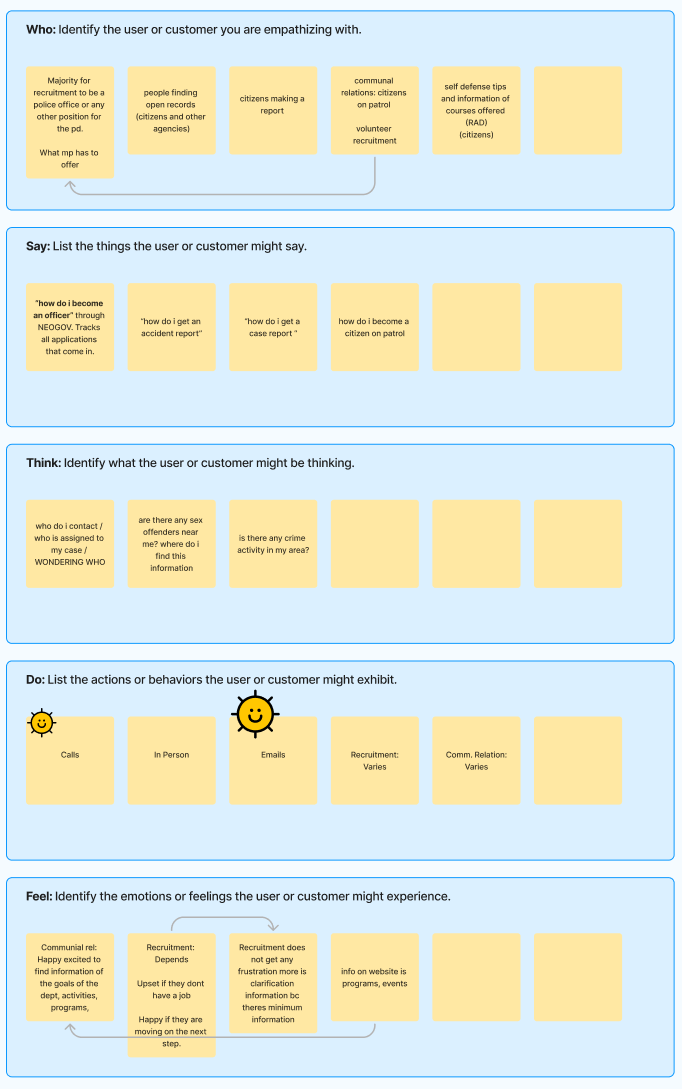
To ensure our redesign aligned with the needs of Midland's users, we conducted empathy mapping to better understand the thoughts, needs, and emotions of different user groups — potential recruits, individuals seeking open records, citizens making reports, and those interested in community programs like Citizens on Patrol or self-defense courses. This helped us surface key questions users might ask, such as "How do I become a police officer?" or "Where can I find accident reports?"
Define Wants
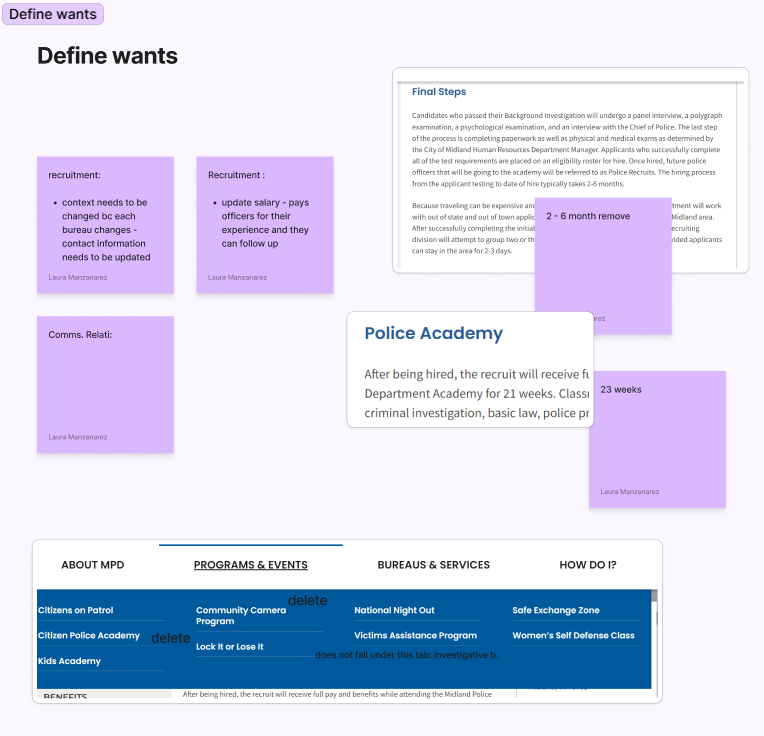
We identified and clarified the needs of both Midland stakeholders and users, outlining key areas for improvement:
- Recruitment Pages: Update salary information to reflect that officers are compensated based on experience; refresh bureau content and contact details.
- Final Steps Page: Remove the outdated 2–6 month hiring timeframe.
- Police Academy Page: Update training duration from 21 weeks to 23 weeks.
- Programs and Events Dropdown: Remove subpages that no longer belong (Citizen Police Academy, Community Camera Program, Lock It or Lose It).
Alignment & Prioritization
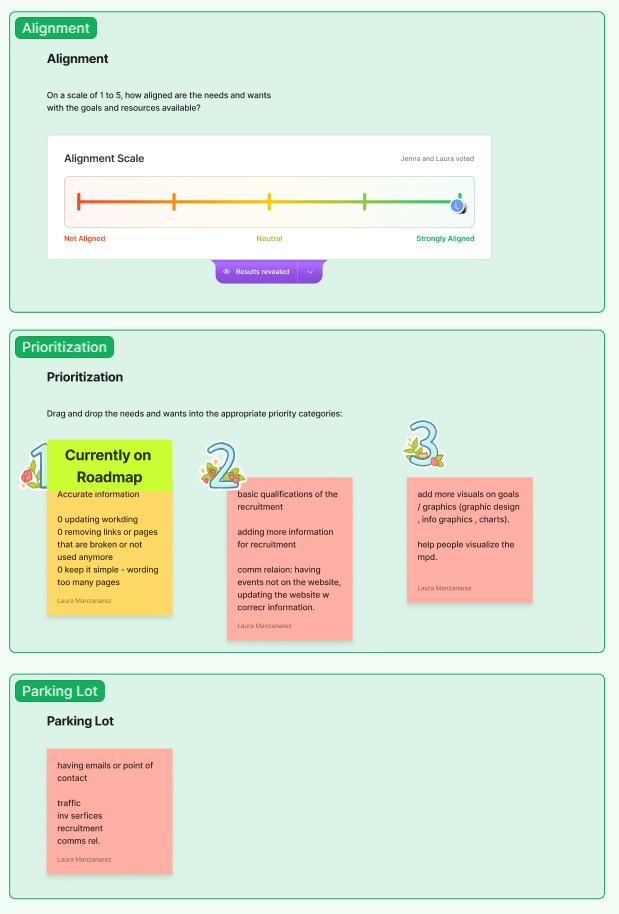
Using an alignment scale in FigJam, we assessed how well each need aligned with the project's goals and resources. On a 1–5 scale, we agreed the needs were strongly aligned at 5/5, and prioritized them into an immediate roadmap, recruitment, community relations, and visual enhancements.
Steps Toward Completion
- Research other police departments — analyze best practices and design trends.
- Analytics review — gather Google Analytics data and assess user behavior.
- Survey launch — develop a Microsoft Forms survey for stakeholders and community.
- Workshop planning — outline agenda and prepare discussion questions in FigJam.
- Content planning — organize and prioritize recruiting content.
- Artifacts creation — personas/archetypes, journey maps, and blueprints.
- Sandboxing and content review — collaborate with MPD before publishing.
👮🏽 Competitive Analysis
Municipal Police Department Analysis
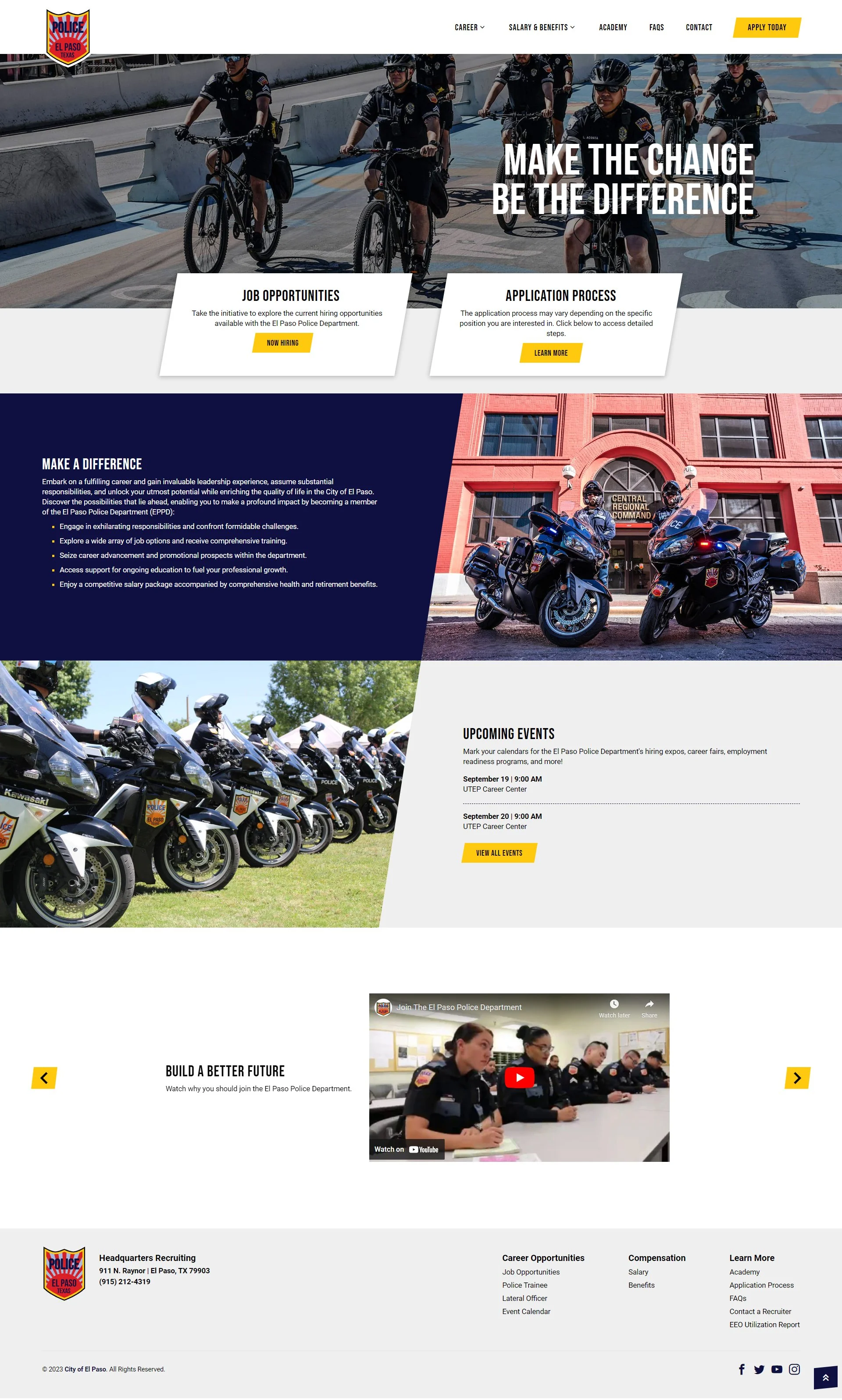
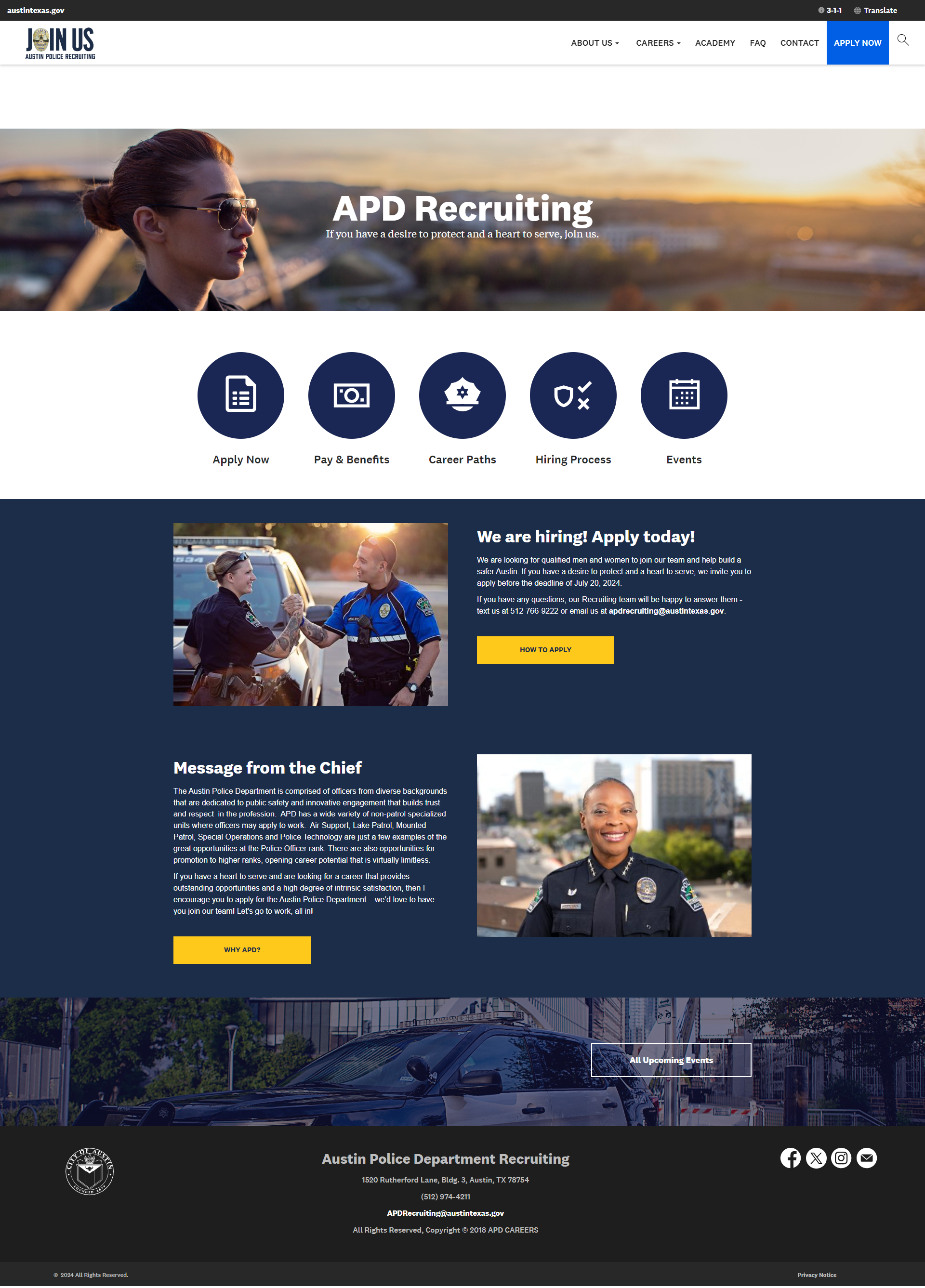
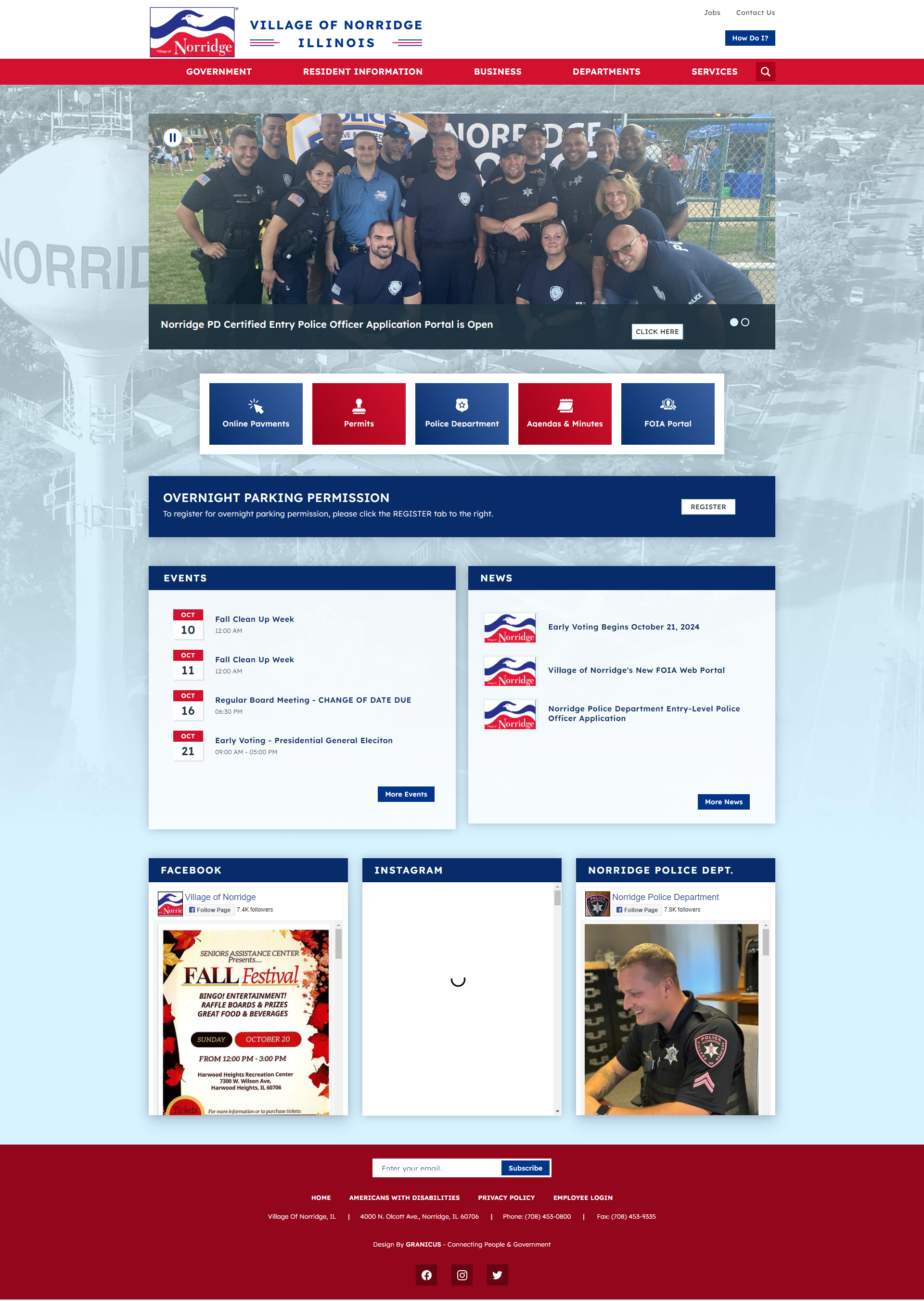
I assisted in a competitive analysis of various police department websites to assess the functionalities they offered compared to MPD's site. We reviewed an article on the 20 Largest Police Departments in the U.S. and placed screenshots side-by-side in FigJam for straightforward comparison.
Our analysis revealed that several sites featured clean, cohesive layouts driven by clear visual division and information hierarchy. We identified functionalities MPD lacked — such as direct links to career paths from landing pages and a dedicated recruitment section under "Quick Links" — and effective organization for content like Join MPD, Qualifications, Process to Become an Officer, Available Roles, Test Preparation, Police Academy, Corrections Academy, and recruiting events.
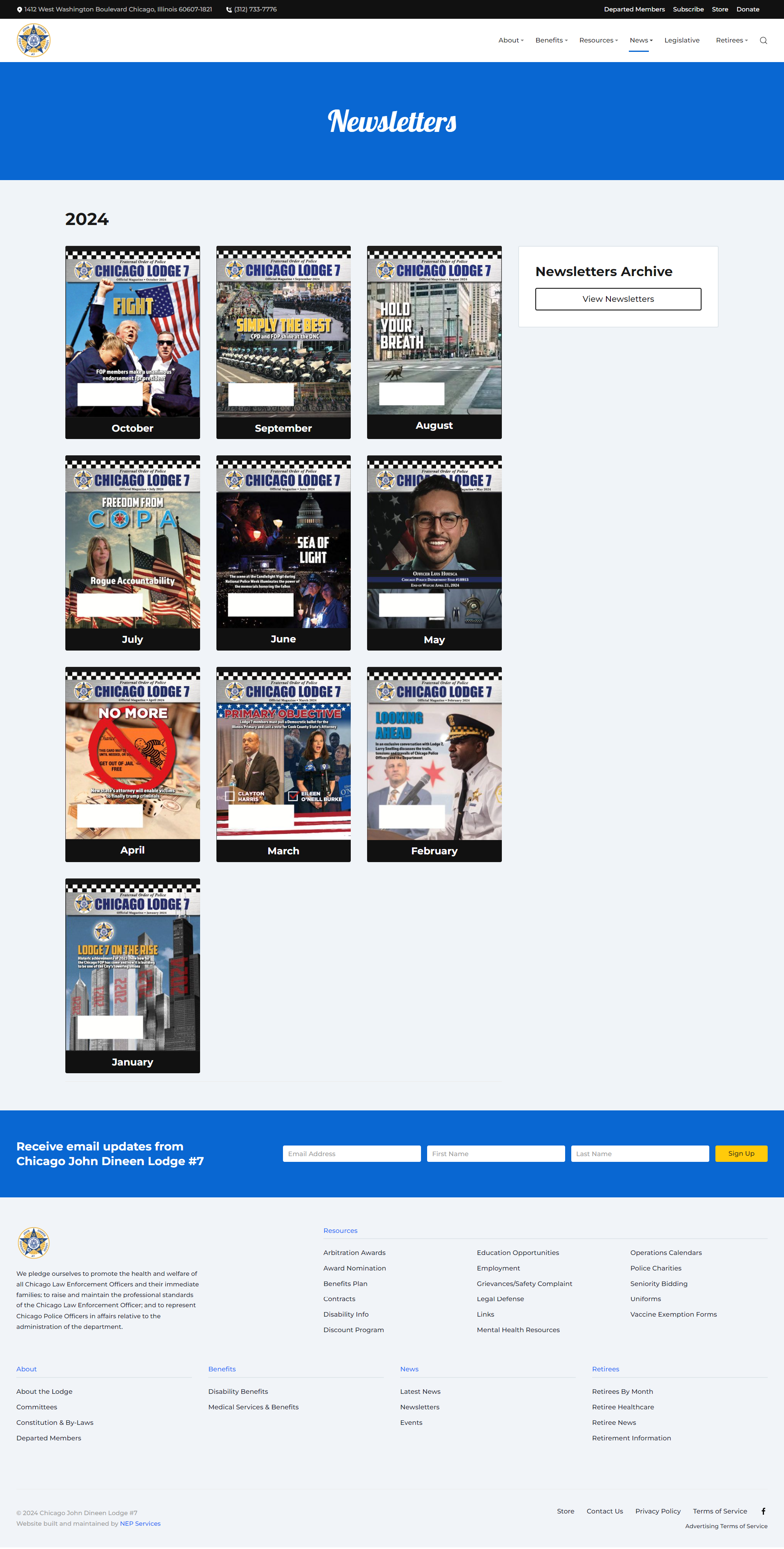
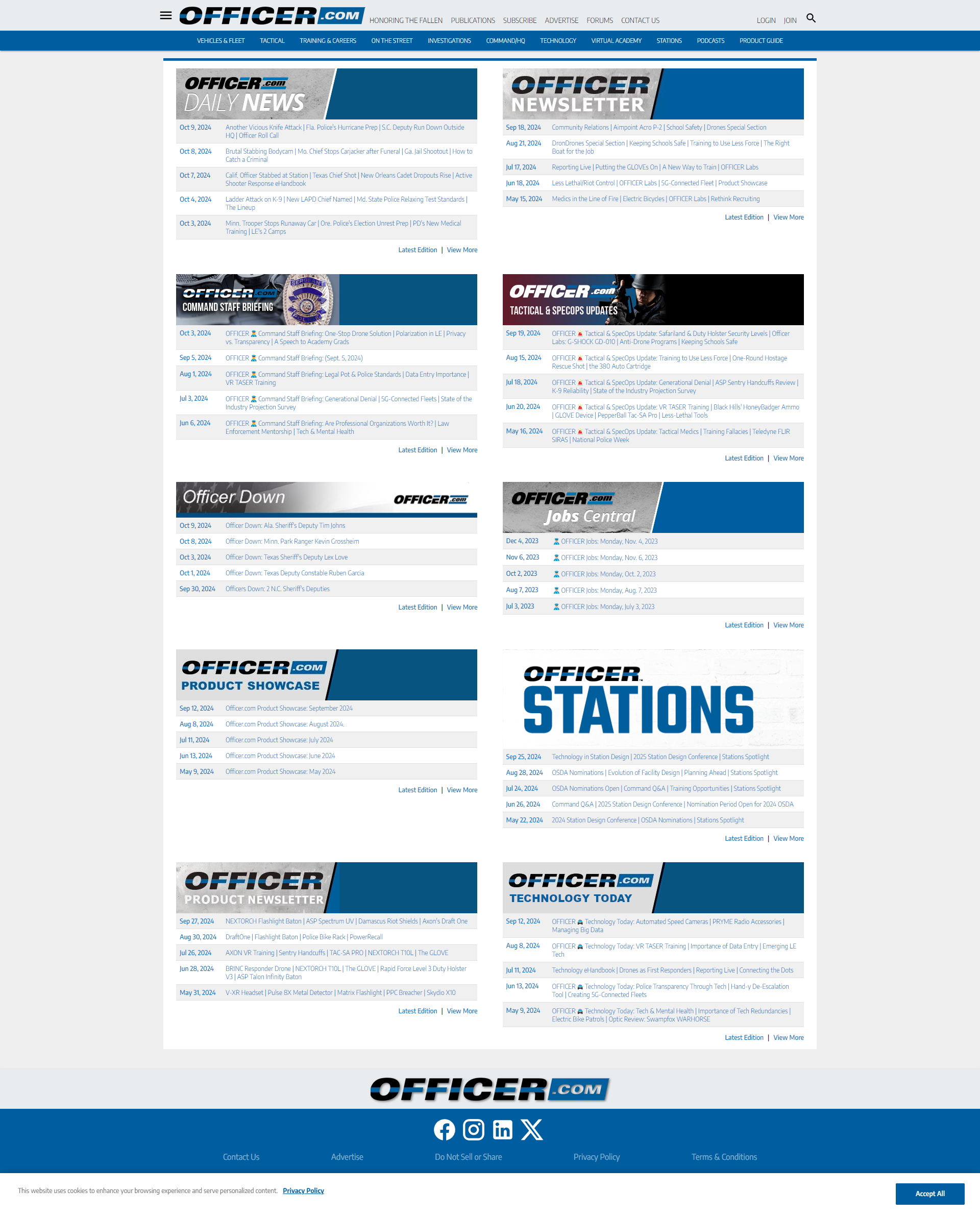
PD Newsletters
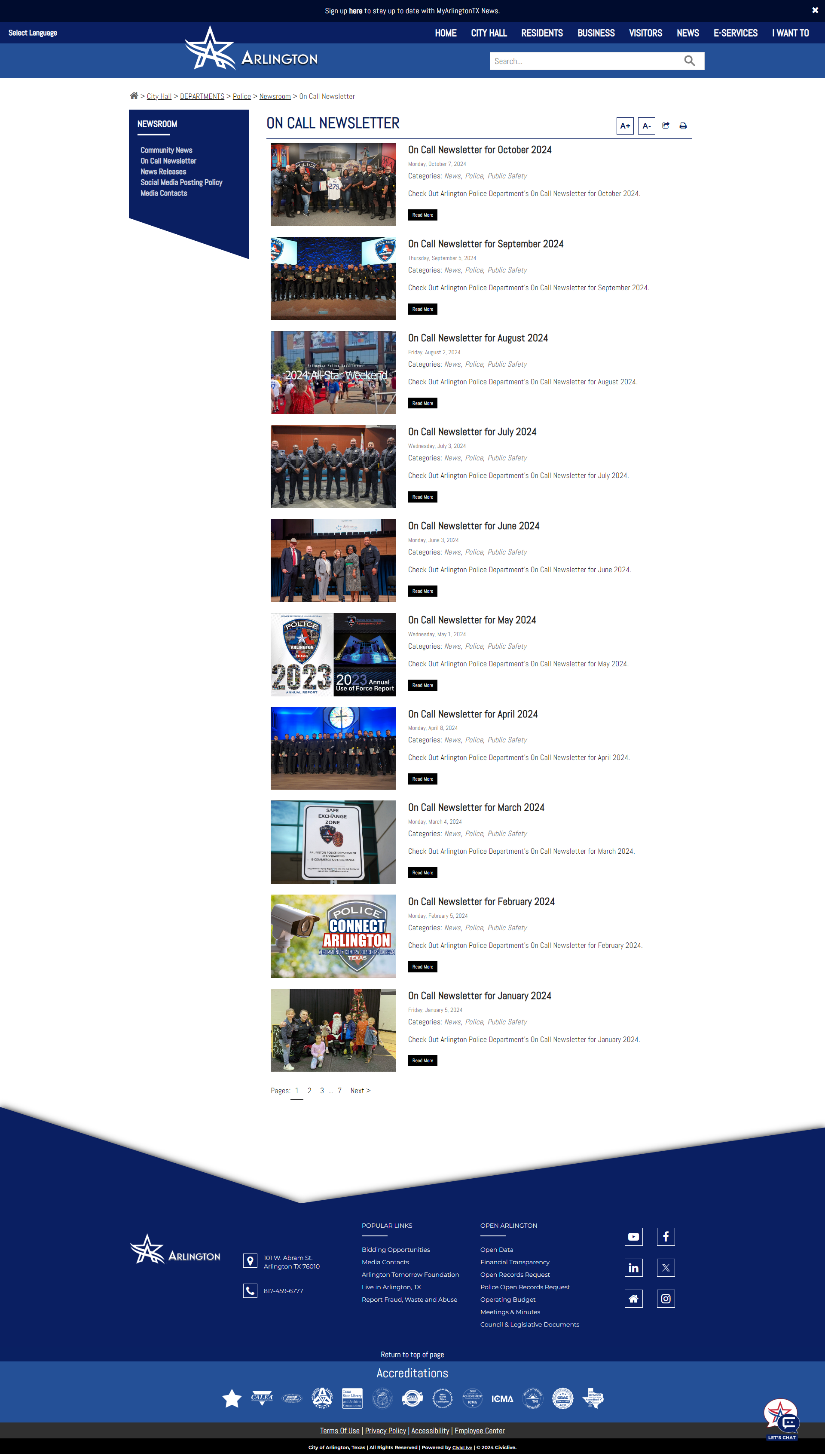
During a stakeholder meeting, the idea of adding a newsletter was discussed. After investigating, it became clear that newsletters were uncommon among Texas police departments — only one municipality featured one. I noted pros (opportunity for banners and safety tips, additional distribution channels) and cons (risk of feeling outdated, resource-intensive, low likely engagement). Based on this research, Midland ultimately decided not to move forward with a police department newsletter.
📈 MPD Analytics
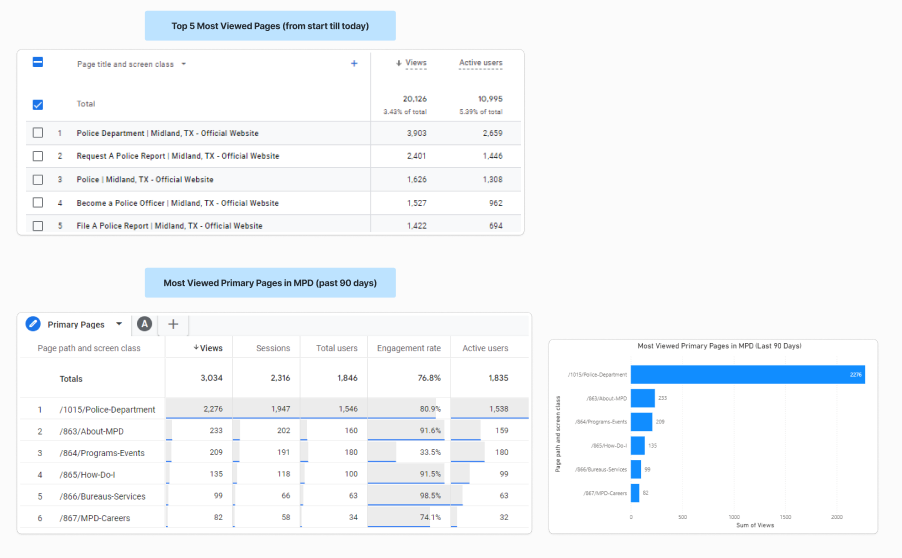
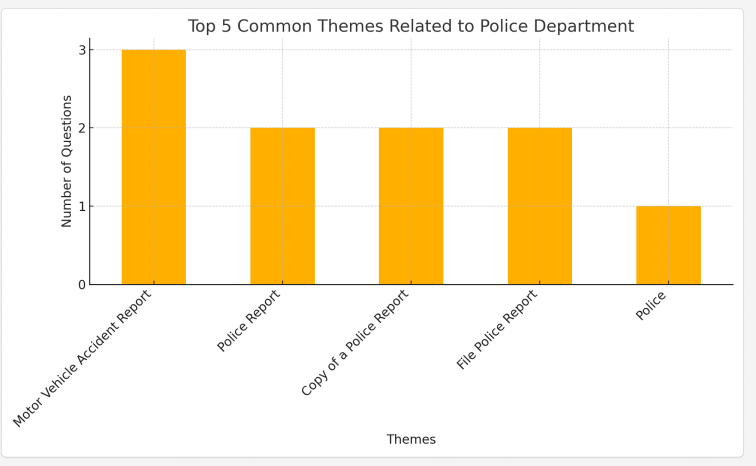
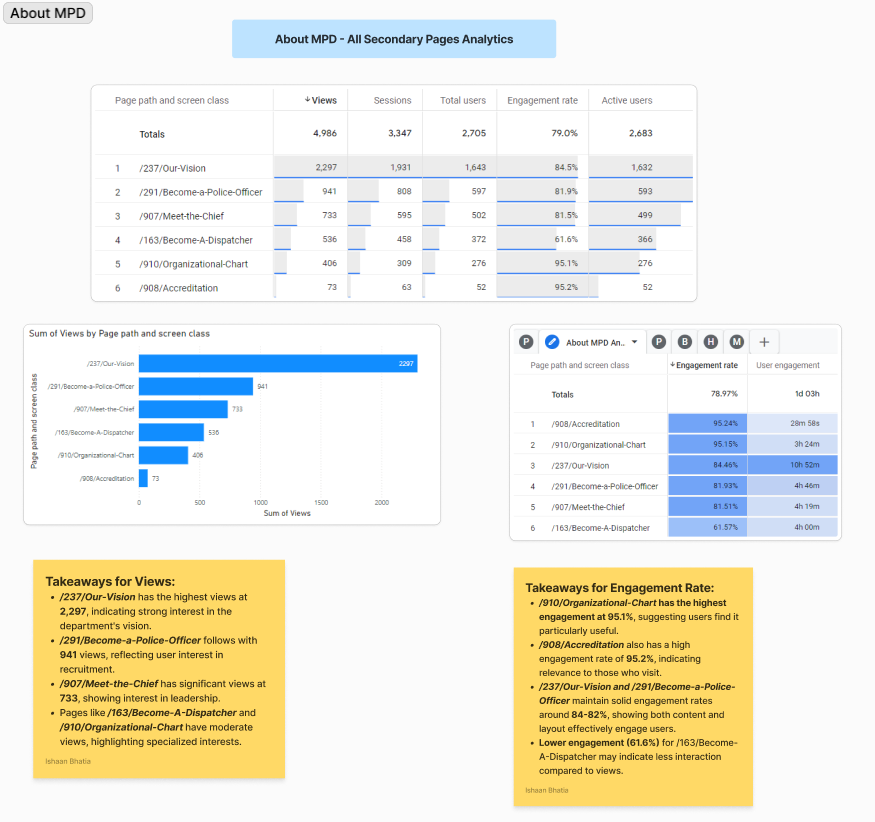
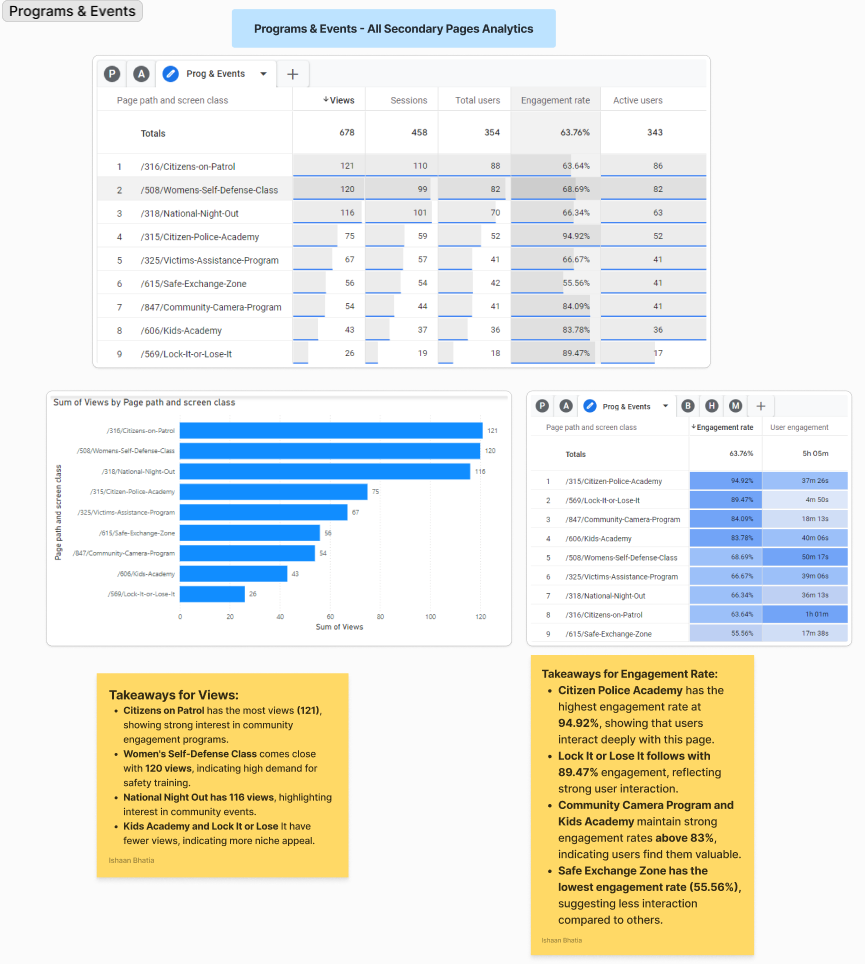
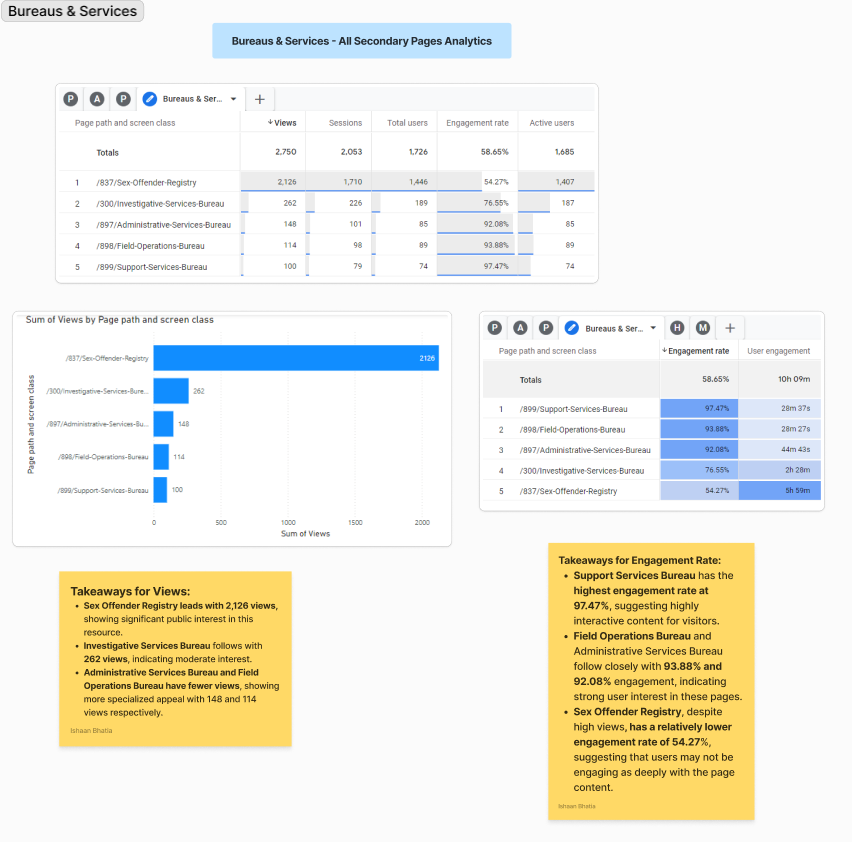
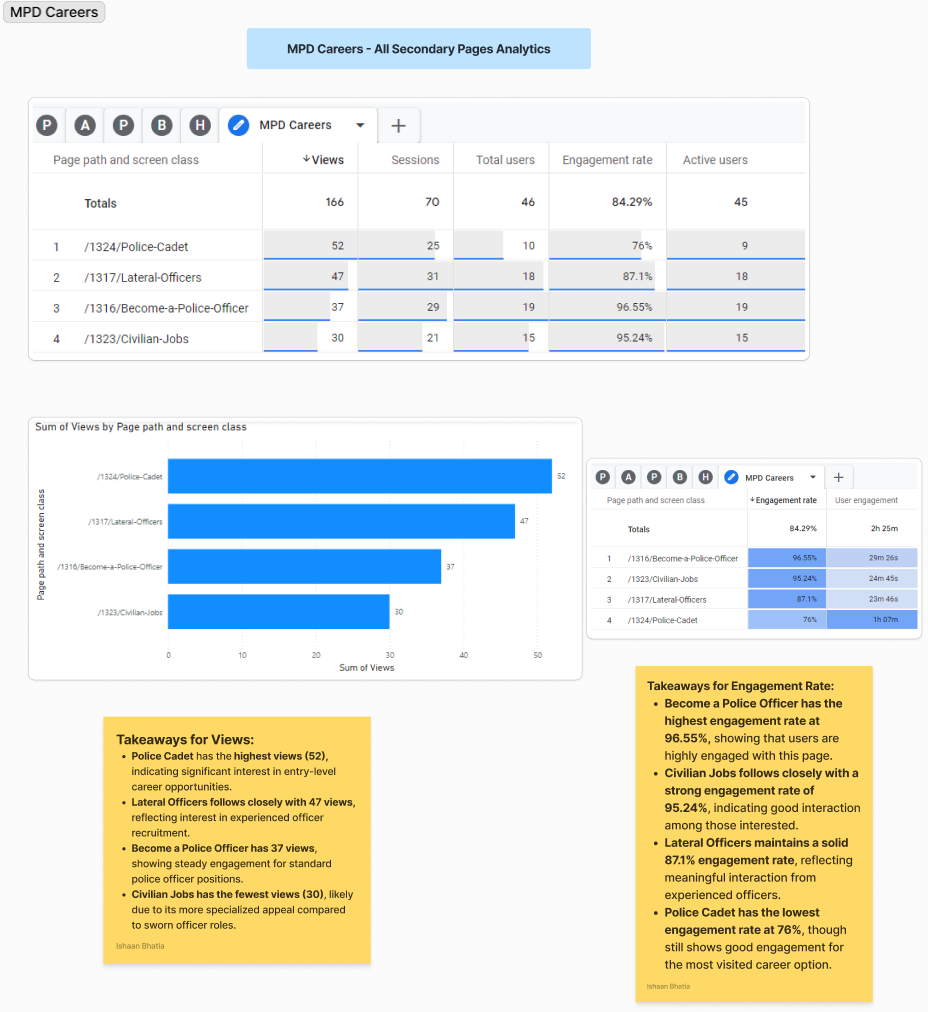
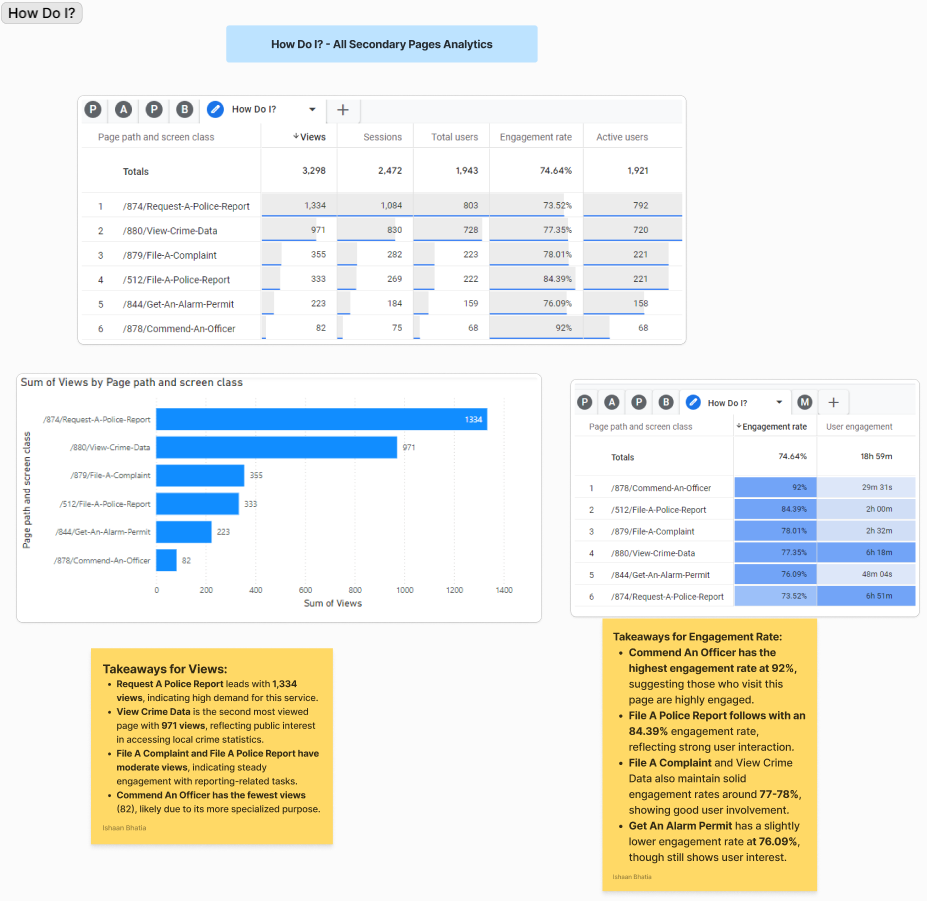
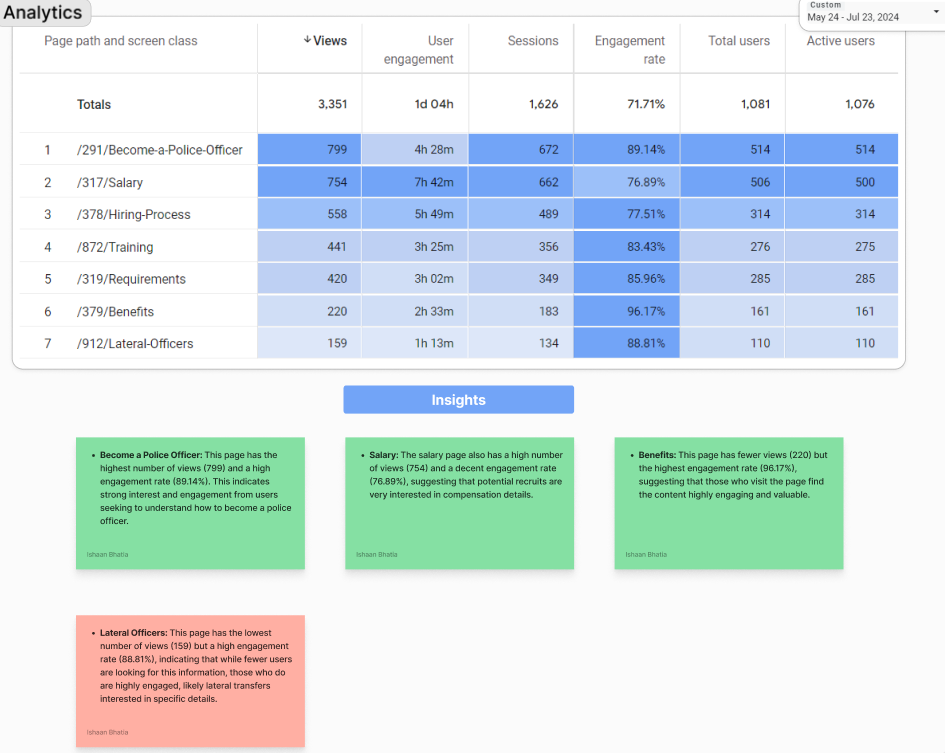
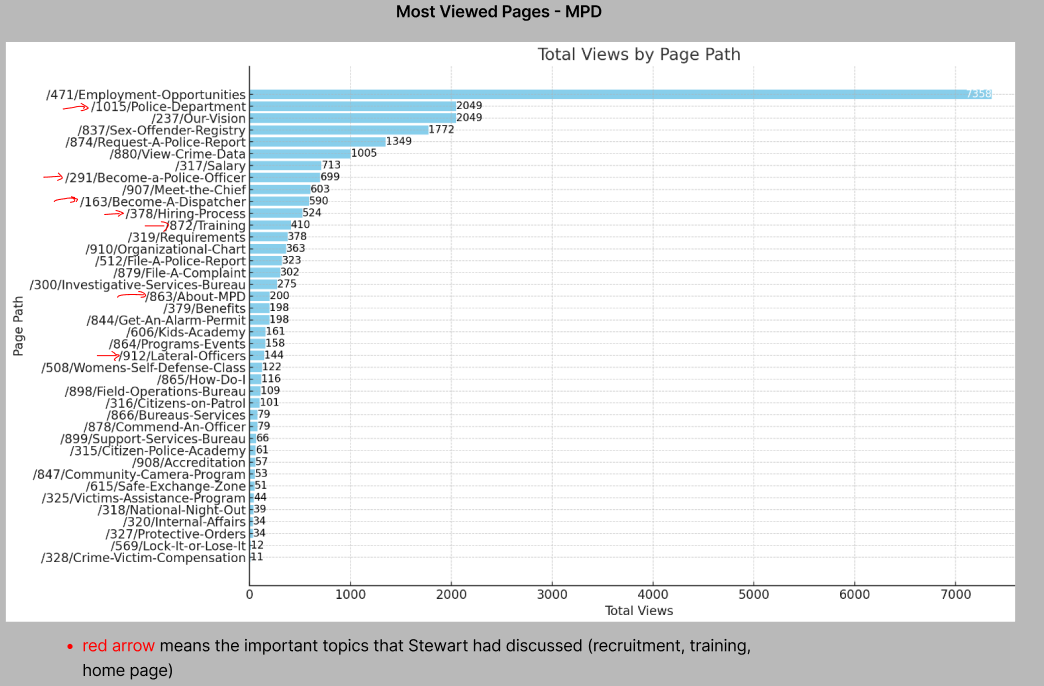
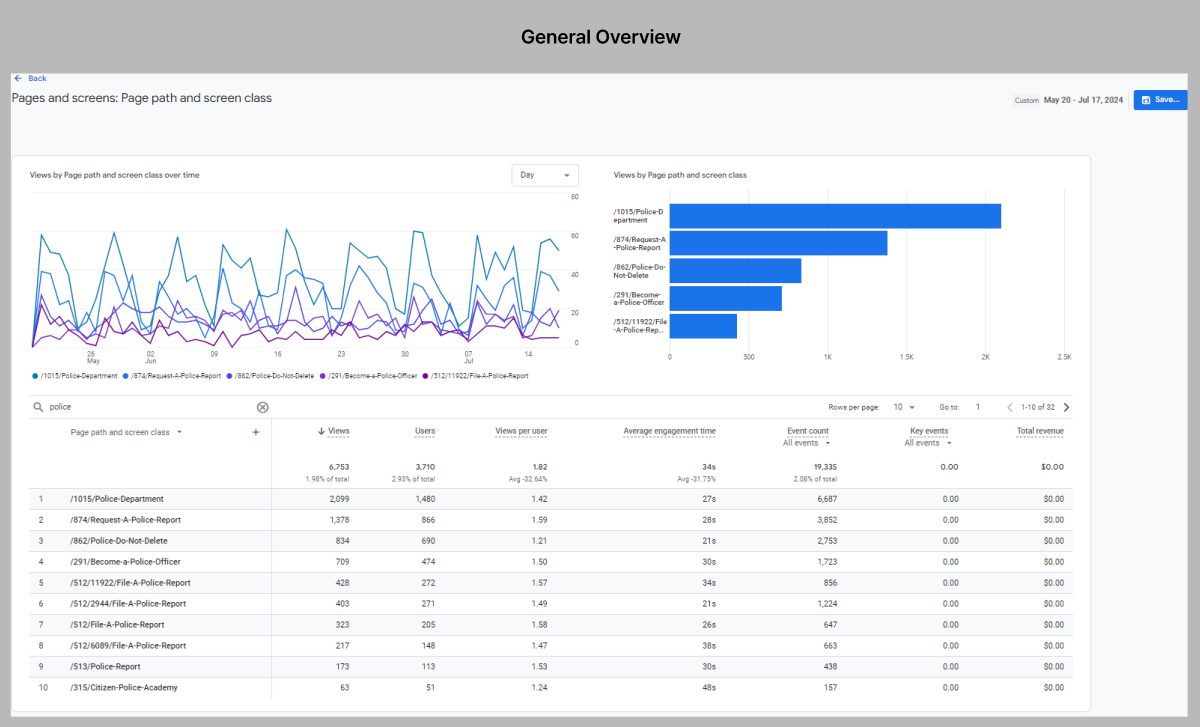
Ishaan, our UX Analyst Intern, played a crucial role in analyzing website analytics to determine the priority of pages that required fixing. Combining MPD data from Google Analytics and AskJacky (Midland's trained chatbot) across all sections, we identified that the most-viewed pages often aligned with the changes the Midland team wanted to implement. The Employment Opportunities page led with 7,358 views, reflecting strong interest in joining the department. Other frequently viewed pages included About the Police Department, Become a Police Officer, Hiring Process, Training, and Become a Dispatcher. Request a Police Report garnered over 1,500 views.
🗳️ MPD Survey
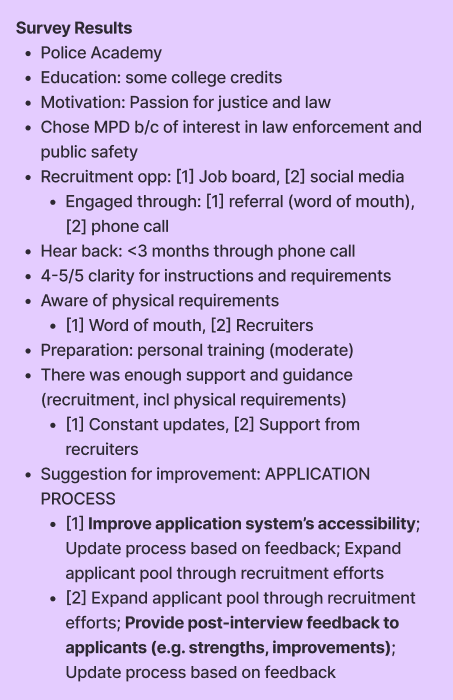
With a clearer focus on prioritizing specific sections and reworking the dropdown menus and overall visual hierarchy, the team drafted a survey aimed at understanding the recruitment process from the perspective of current MPD officers. This survey targeted police academy graduates and established officers whose insights would be invaluable in shaping the "Become an Officer" page.
The survey combined qualitative and quantitative methods across sections including Background Information, Recruitment Process, Application and Selection, and Feedback. Logistics: Microsoft Forms, targeting ~190 current officers, ~90 expected responses within a 1-week timeframe, conducted anonymously.
Key Findings
- Role and Education: all four respondents applied for the Police Officer role; education split between "some college credits" and "bachelor's degree."
- Motivations: passion for justice was the top motivator; desire to serve the community was primary.
- Recruitment Channels: referrals and online job boards were the most common sources.
- Recruitment Process: most heard back within 3 months; phone calls were the most common communication method.
- Physical Requirements: all were aware and prepared through personal training; difficulty split between moderate and difficult.
- Support and Experience: all felt supported; clear communication and openness from recruiters was highlighted.
- Areas for Improvement: post-interview feedback, continuous review of the process, and greater diversity of applicants.
- Satisfaction: all respondents would "very likely" recommend MPD.
Implications
Overall sentiment was positive, with satisfaction in clear communication and supportive experience. Specific areas for improvement included outreach (leveraging online sessions and social media), providing post-interview feedback, improving the accessibility of the application system, and expanding efforts to attract a more diverse pool of applicants. These findings were passed to the recruitment team for future recommendations.


🛠️ Workshop
The UX team conducted a workshop with the MPD recruitment team to gain insights into the current recruitment process and enhance the digital journey for prospective applicants. The primary objective was to facilitate a discussion that would help the UX team understand recruitment from the recruiter's perspective.
UX Team Content Planning
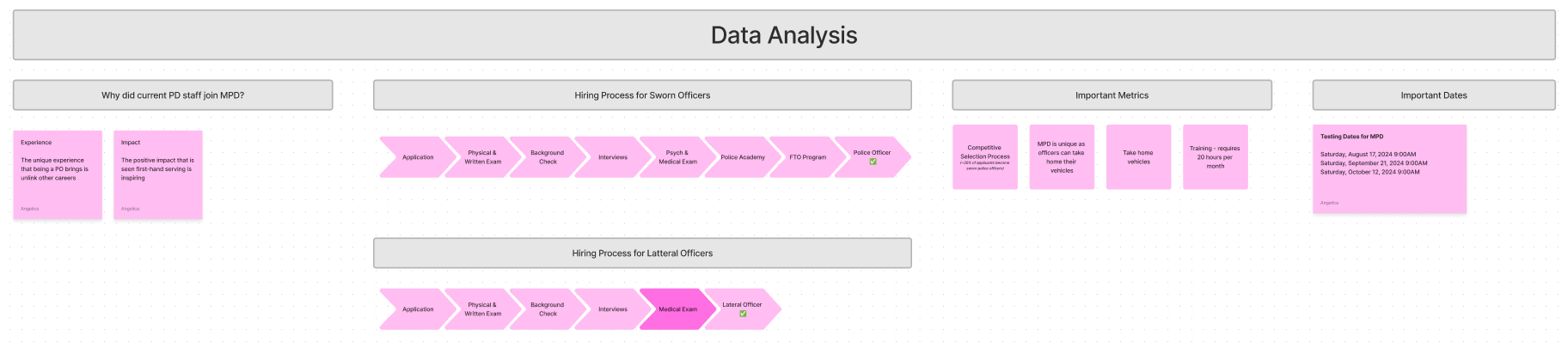
Given the extensive information provided by the recruitment team, the UX team collaborated to organize and analyze the insights. This allowed us to pinpoint gaps in information and determine which sections needed the most attention.
Recruitment Goals
The recruitment team highlighted outreach initiatives — hosting events like "Coffee with a Recruiter," participating in job fairs, and using social media. Their goal was to reach 195 sworn officers, currently at 169 out of 200+ over six years, with roles ranging from sworn (lateral, police, cadet) to specialized (crime scene investigator, records technician, etc.).
Process & Key Metrics
- Application Process: all applicants apply via NeoGov; new recruits operate independently rather than under a trainer.
- Lateral Officers: similar process; no academy training; bypass psychological exam; participate in a Field Training Program.
- Key Metrics: the physical test disqualifies ~70% of applicants; the polygraph exam eliminates another ~15%.
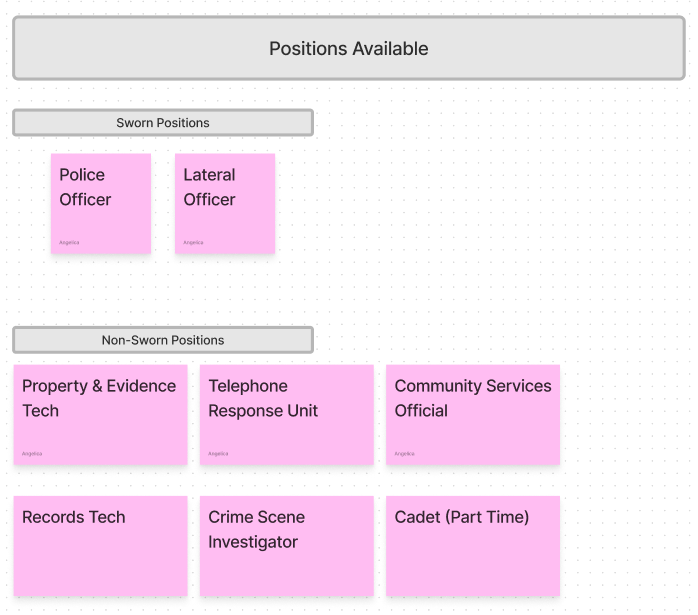
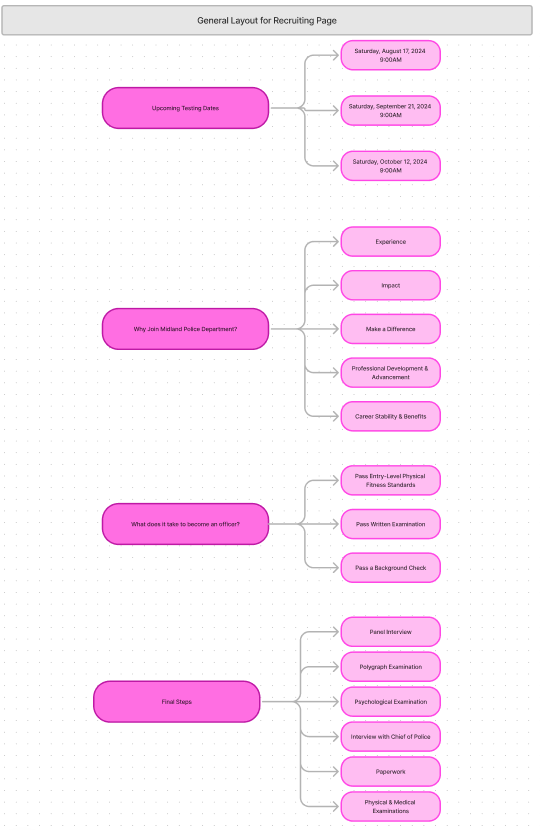
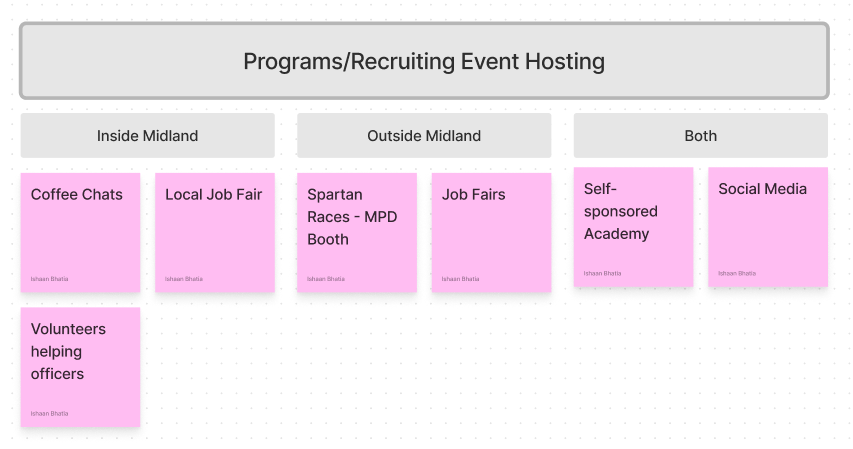
👤 Archetypes
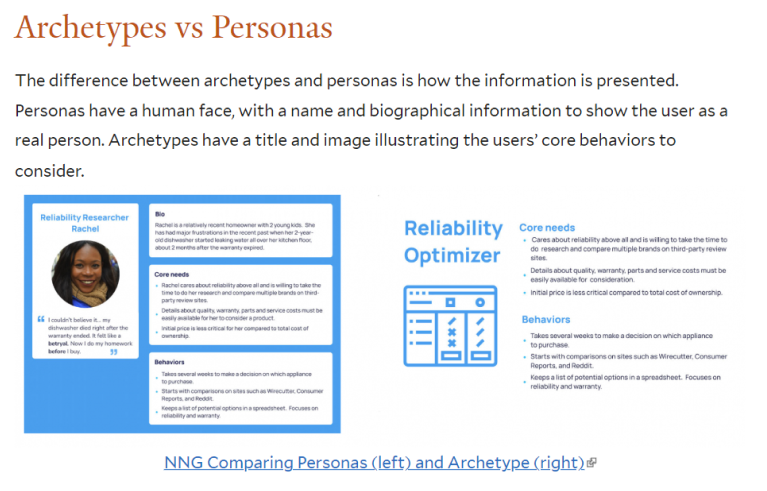
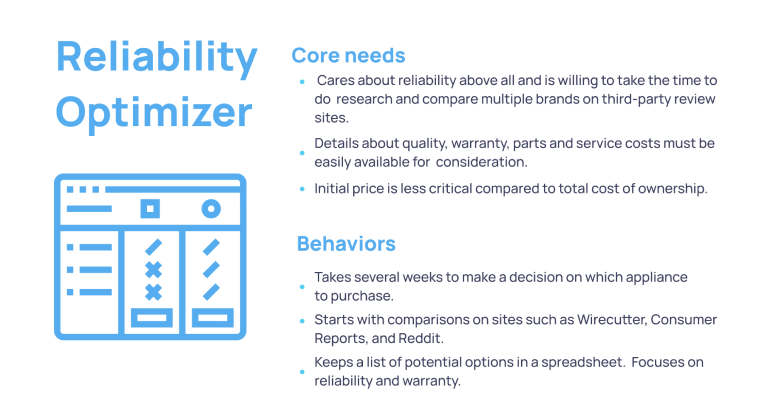
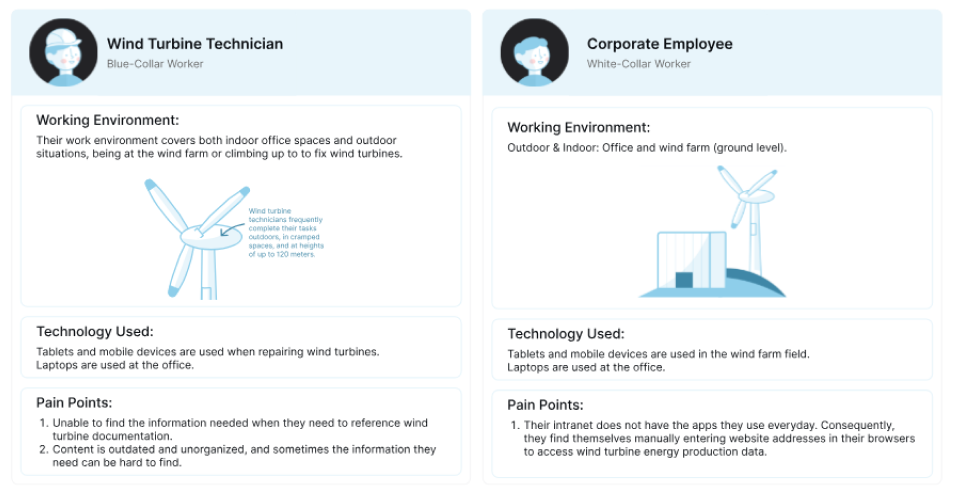
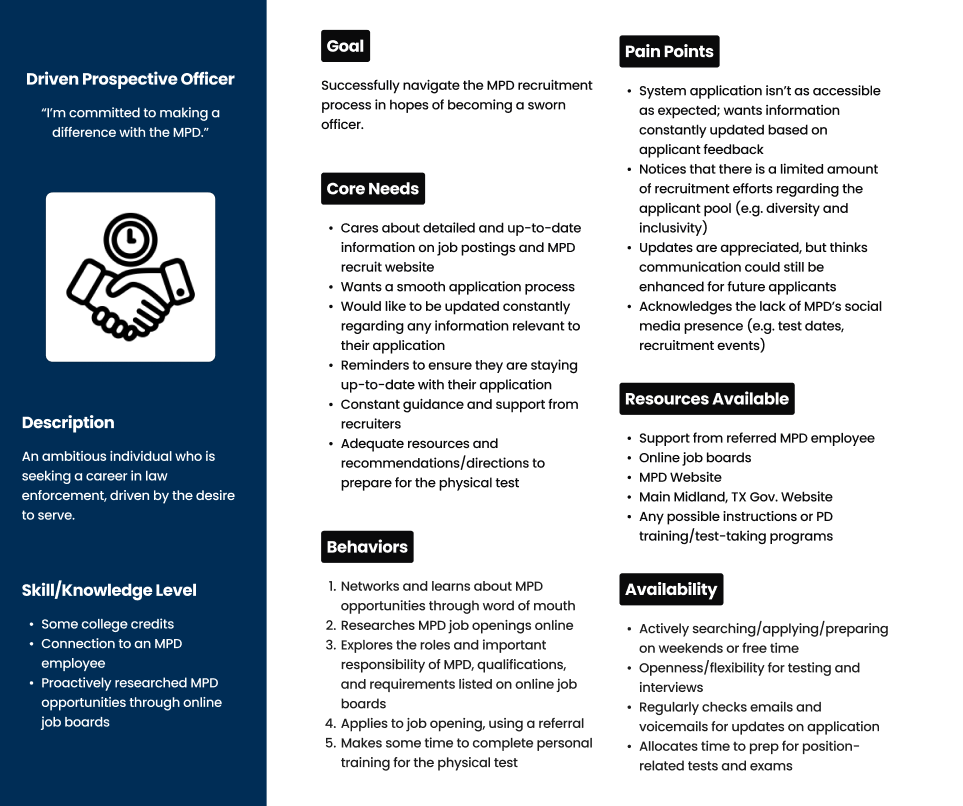
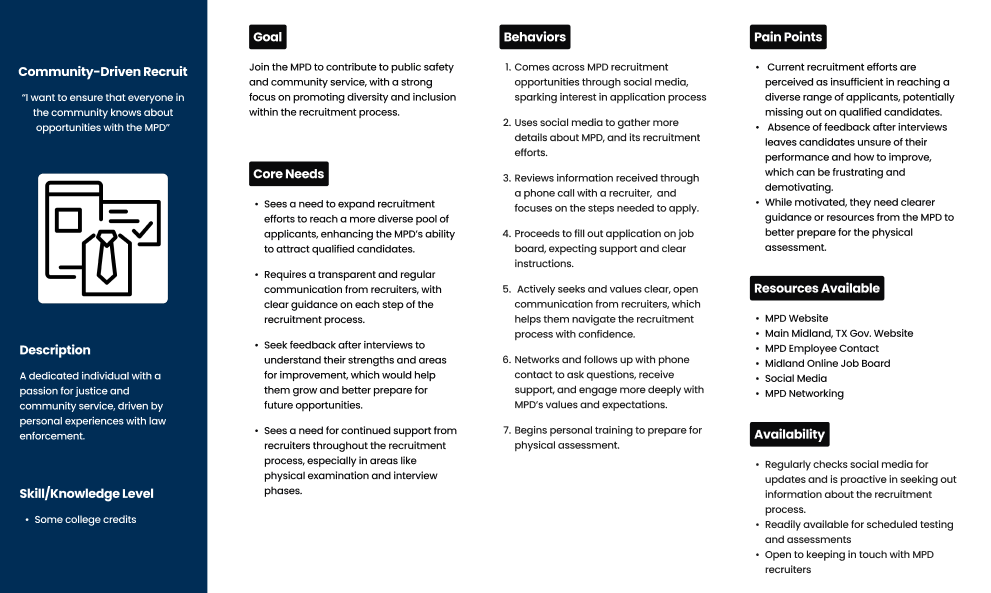
I was assigned to create archetypes for the first time, transitioning from my previous experience with personas. Archetypes do not label users but instead focus on inclusive design and are informed by multiple sources rather than a single individual's opinion — making them more relevant to the product or service. In this case, archetypes effectively represented our user research, grounded in analytics and survey results.
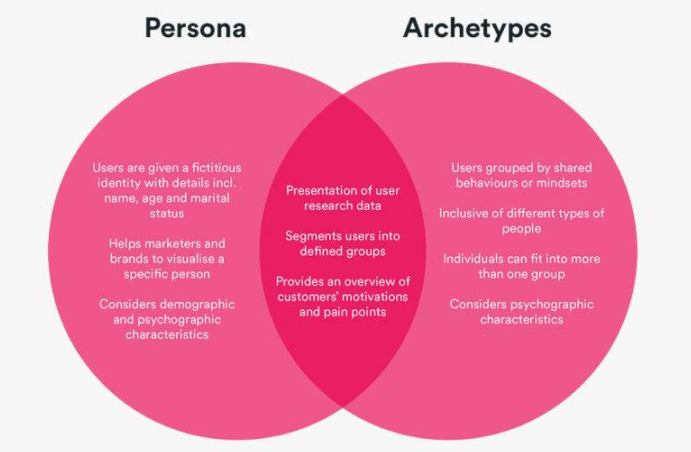
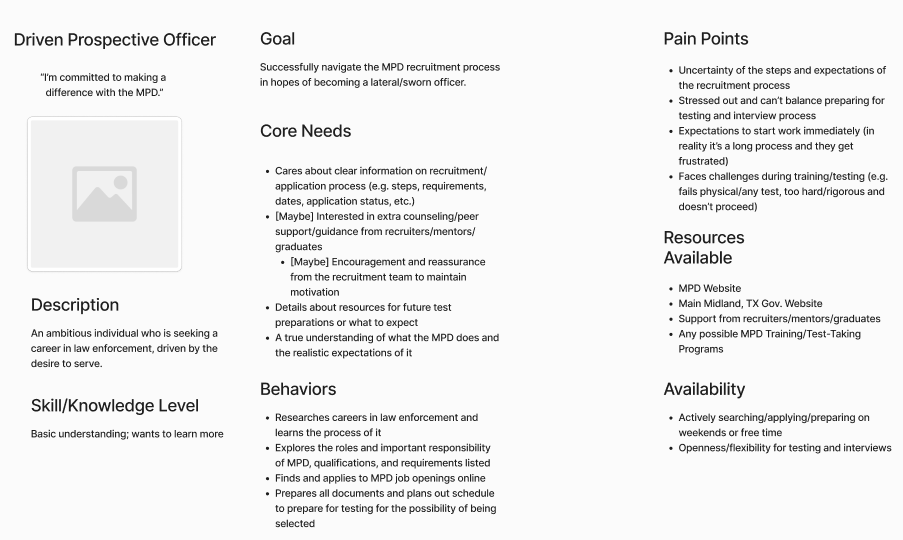
Below is a rough draft of an archetype focused on the MPD recruitment process, developed before the survey results returned. It consolidated my existing knowledge about MPD and highlighted how thorough research shapes an archetype.
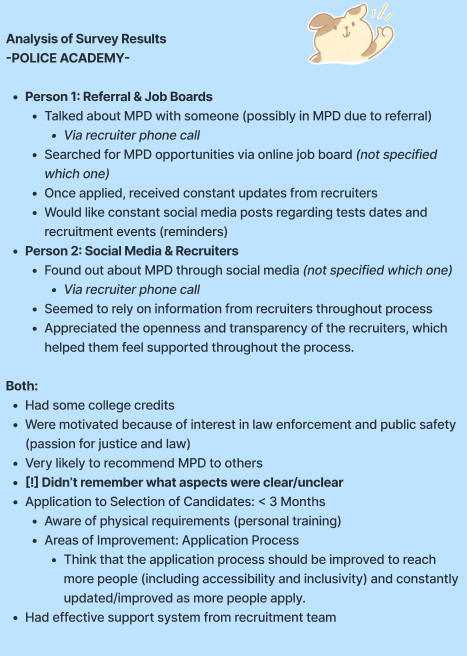
Working with Ishaan on analysis, we facilitated survey-result review and created two distinct user archetypes using sticky notes to document relevant findings.
🛣️ Customer Journey Map
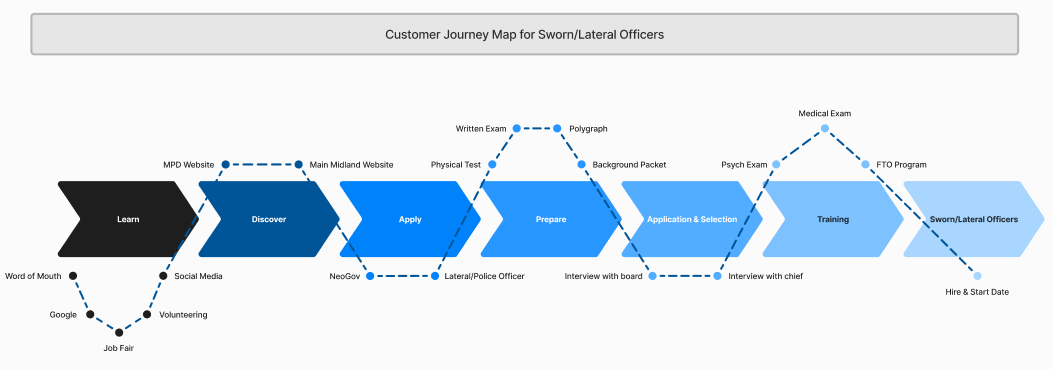
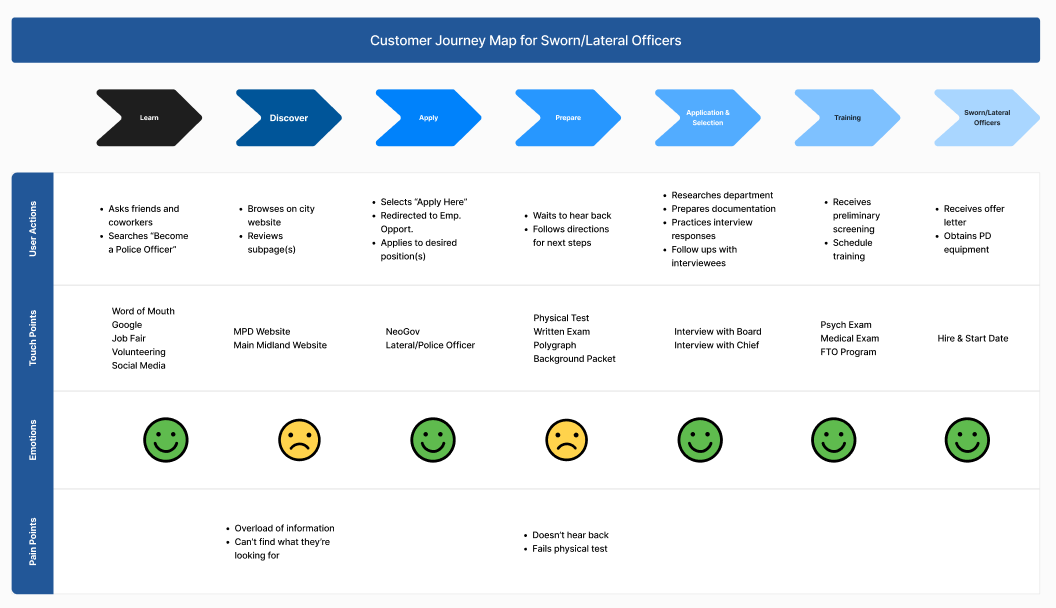
A customer journey map was created for the MPD recruitment process. This approach was chosen for its ability to surface key interactions, pain points, and opportunities for improvement throughout the recruitment journey. I researched existing examples of customer journey maps to guide the development of an effective framework tailored to MPD.
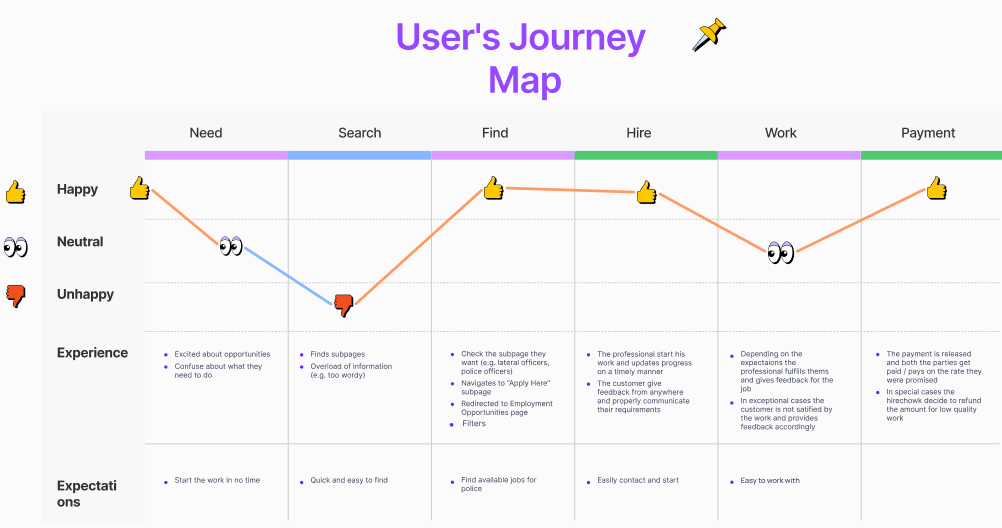
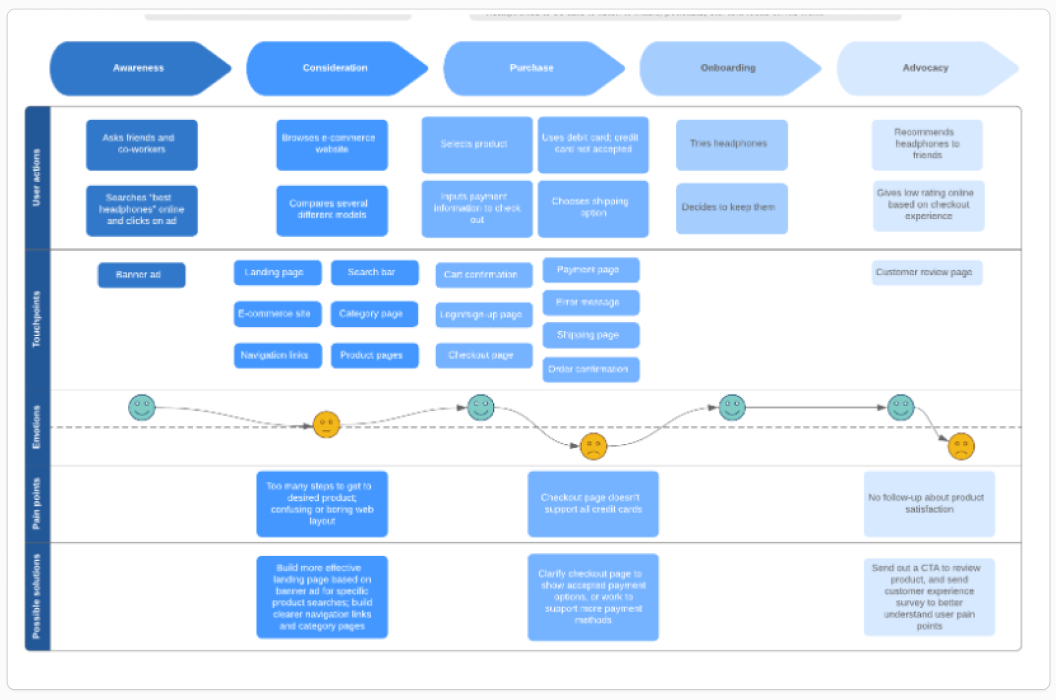
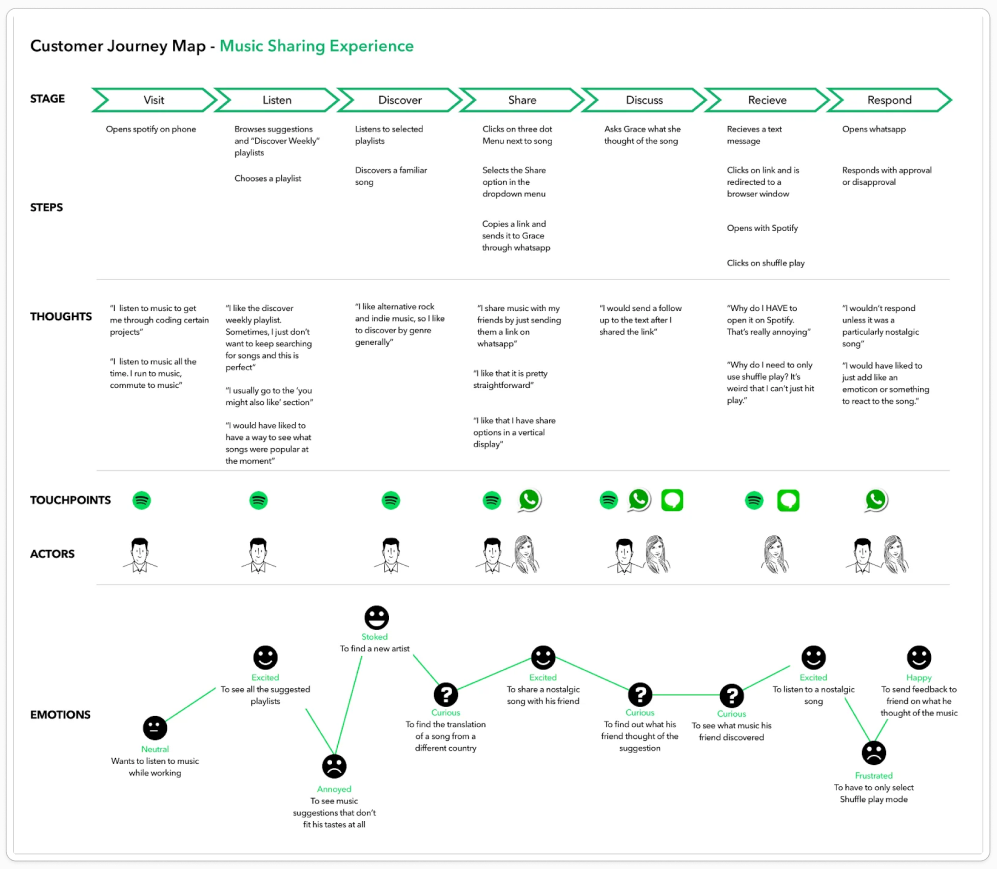
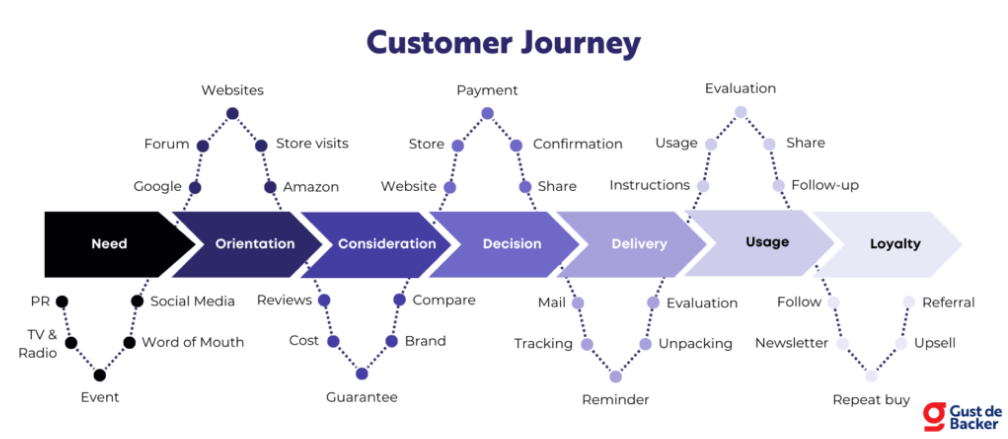
While the customer journey maps shined a light on MPD's recruitment process, some gaps limited their effectiveness in capturing the complete user journey. The UX team concluded the maps did not fully encompass all phases of the recruitment experience, highlighting the need for a more comprehensive approach.
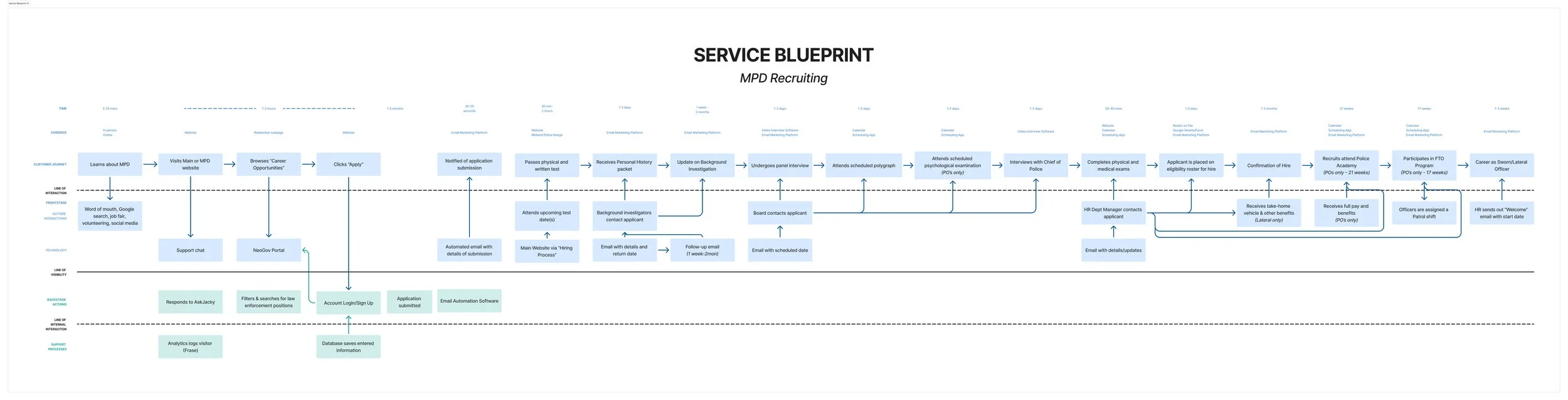
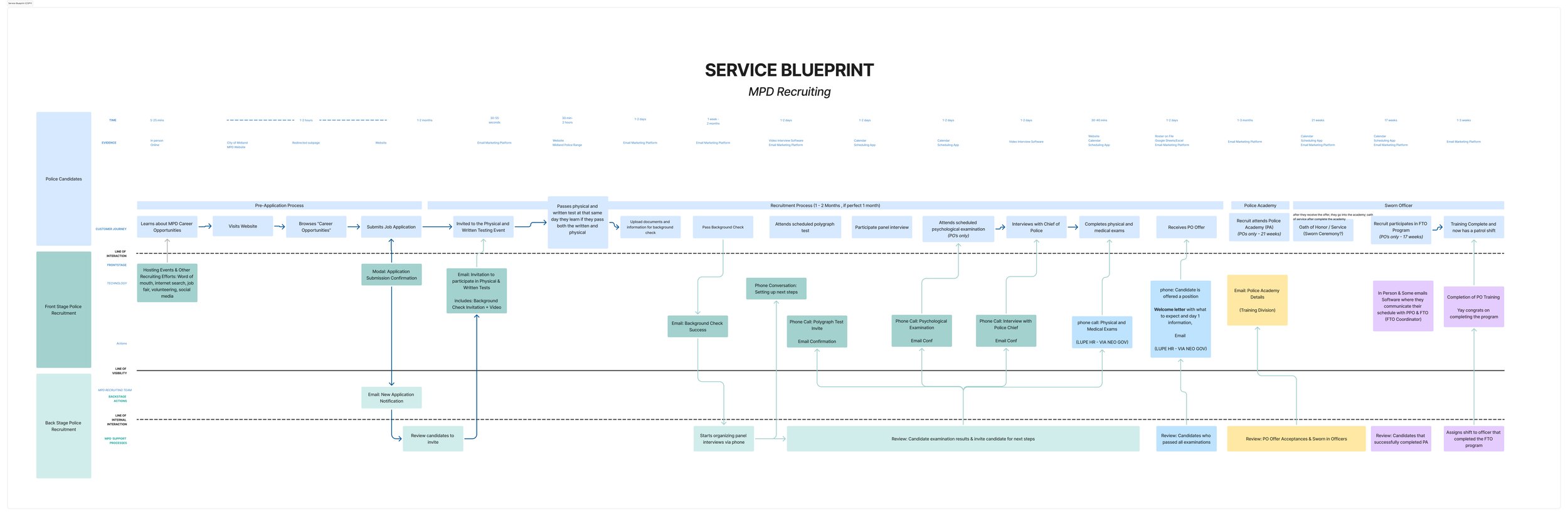
🔦 Service Blueprint
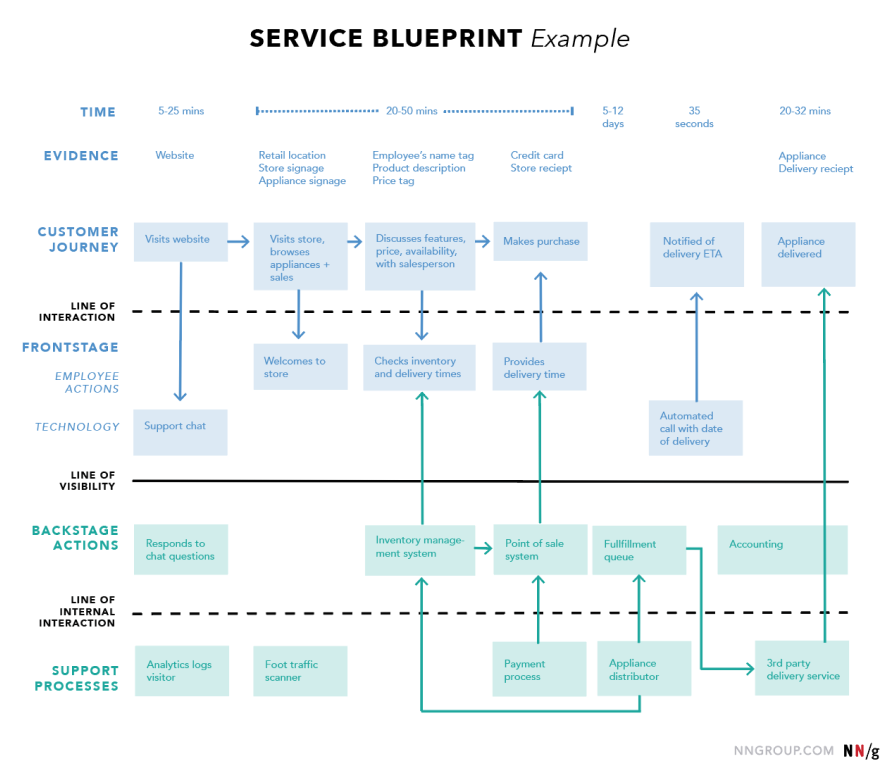
The team decided to explore a service blueprint as an alternative to the customer journey map. Creating a service blueprint would enable us to diagram the relationships between people and the recruitment processes in their entirety. To expedite the work I researched examples on platforms like Miro, but we ultimately chose FigJam for its familiarity and features.
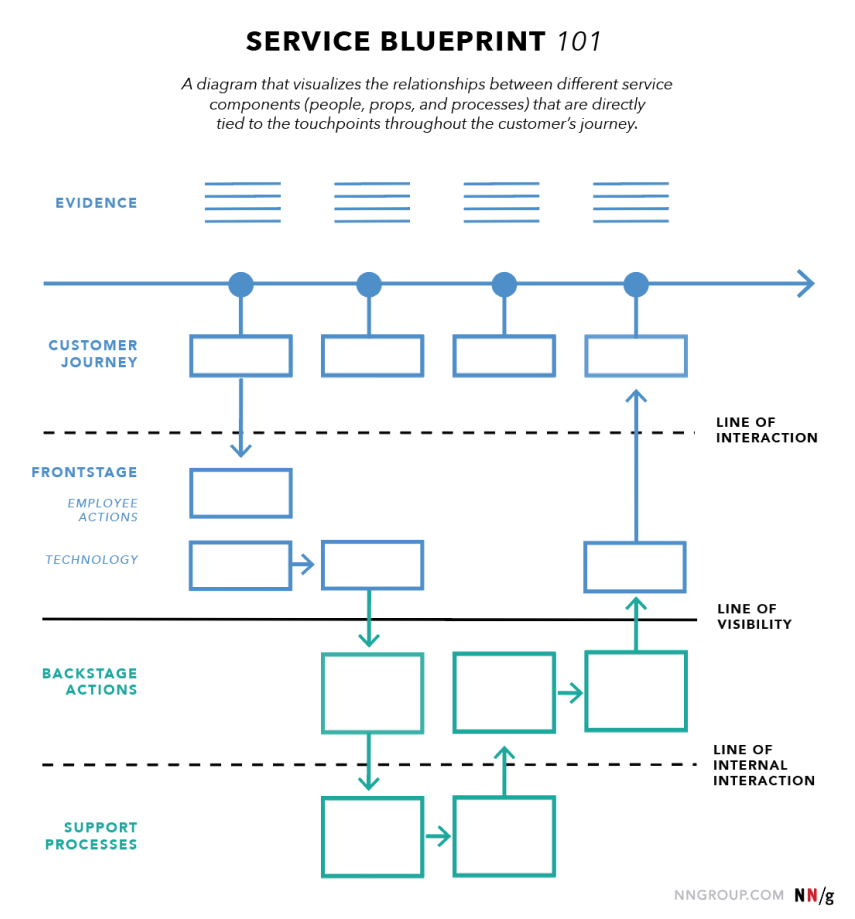
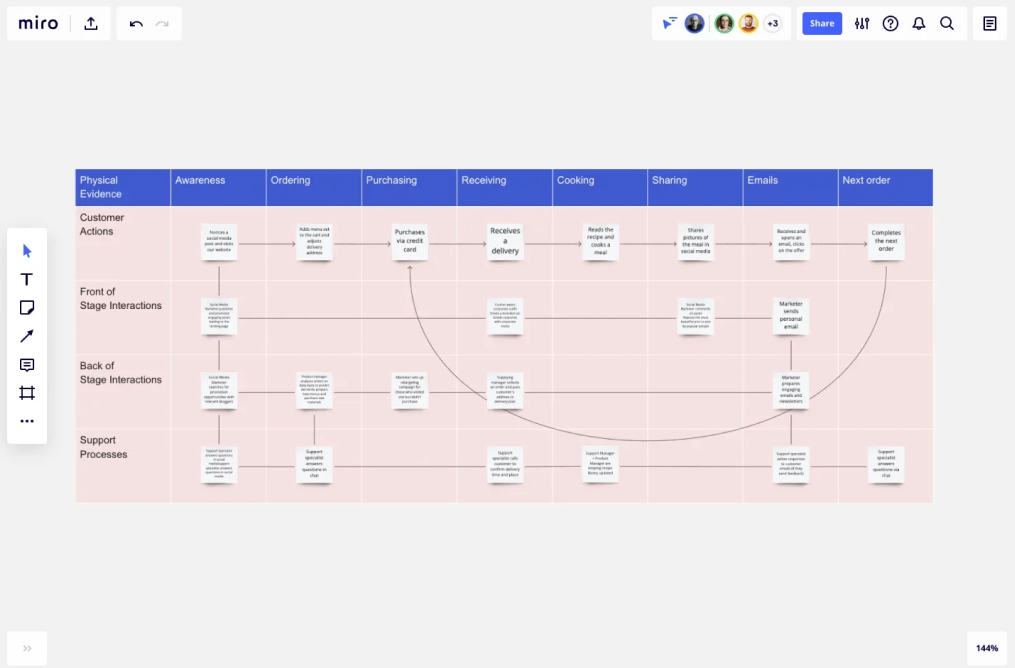
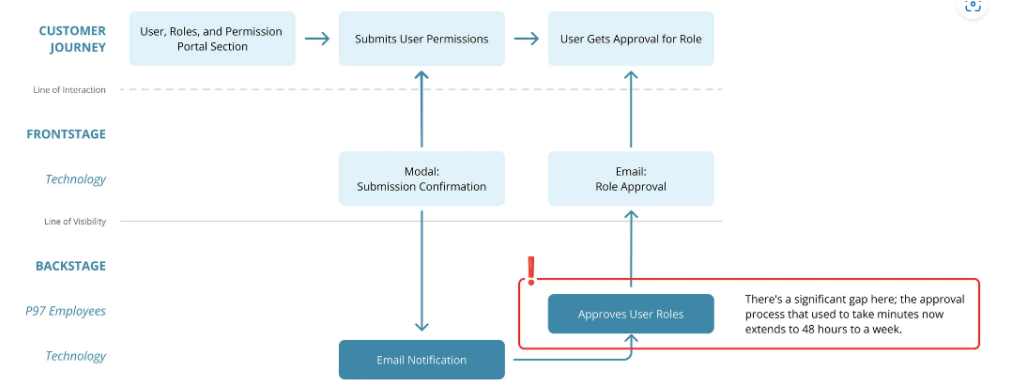
I drafted the initial service blueprint for the UX team to evaluate and refine, then we adjusted the organization to accurately represent placement within the lines of interaction and visibility, incorporating feedback from the recruitment team.
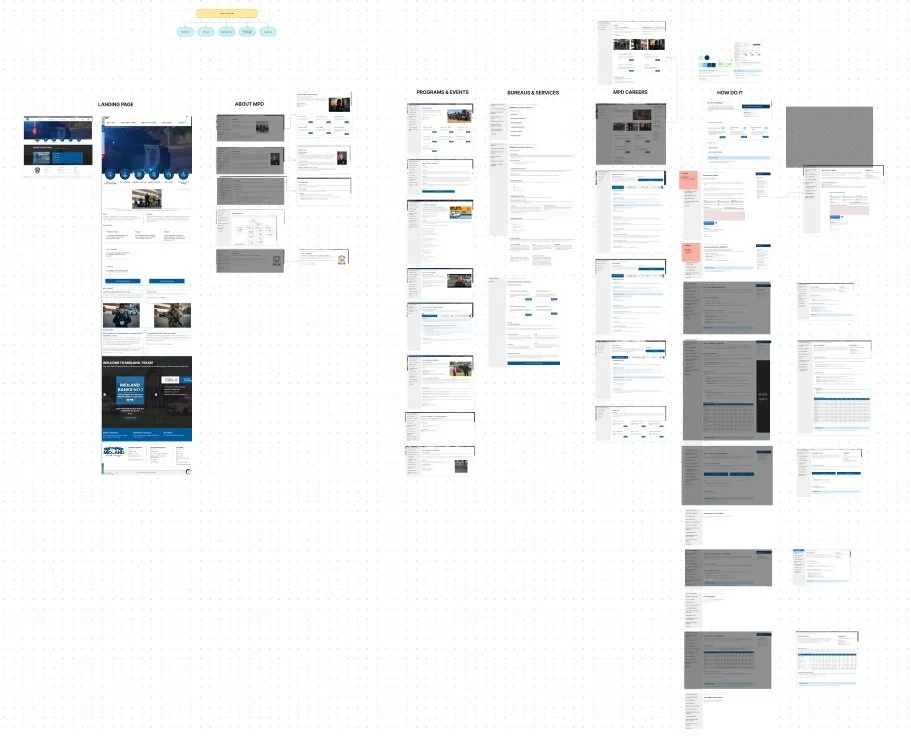
🗺️ Revised Sitemap
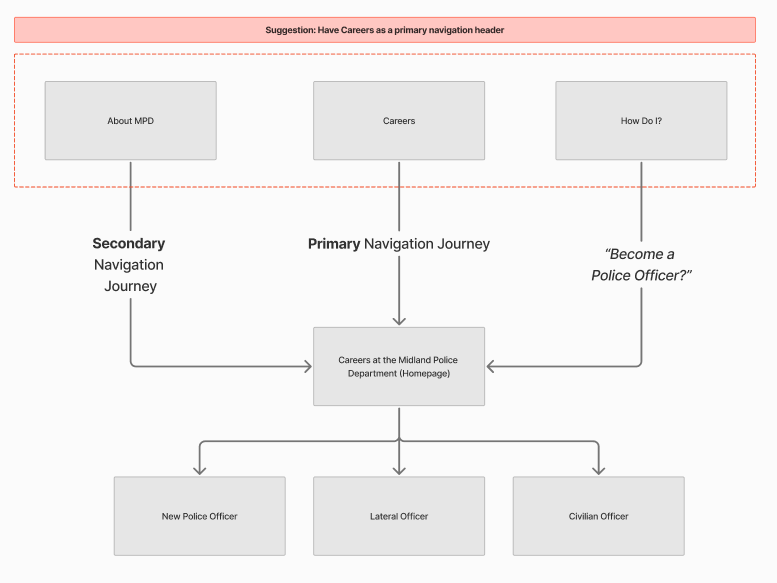
After completing our research and analysis, we developed a new sitemap that clearly outlined the organization of subpages within the updated structure. This included the addition of an "MPD Careers" dropdown to enhance the recruitment section. We shared the sitemap in a content document that detailed current structure, proposed changes, and open questions for the MPD recruitment team to review before we moved to Civic.
📃 Published Pages
Once the content was approved and our sandboxes on Civic received the green light for publishing, I worked with a few other UX team members to review the sandboxed pages. We captured and compared screenshots of these pages to ensure design and content consistency across the site before publishing.
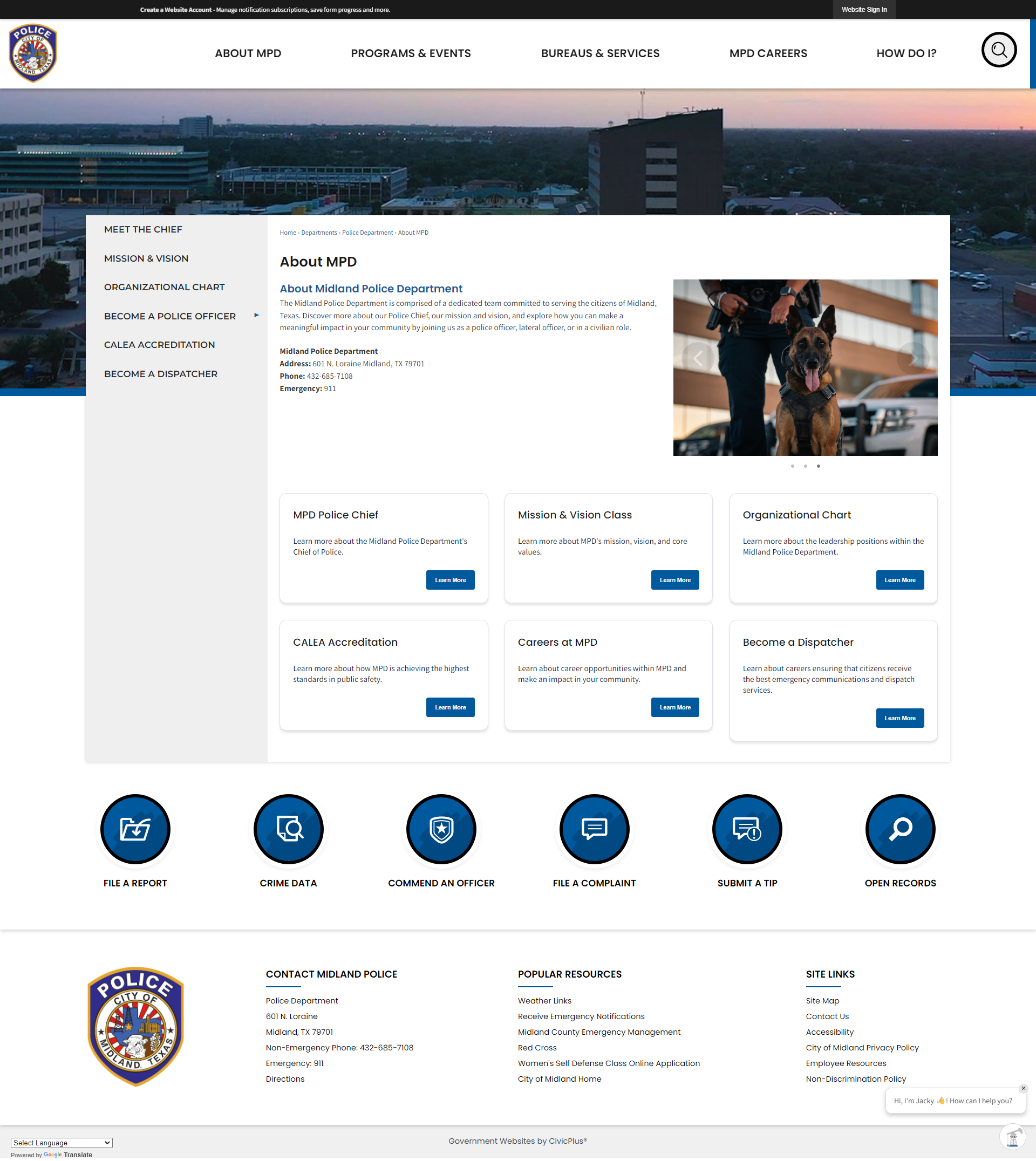
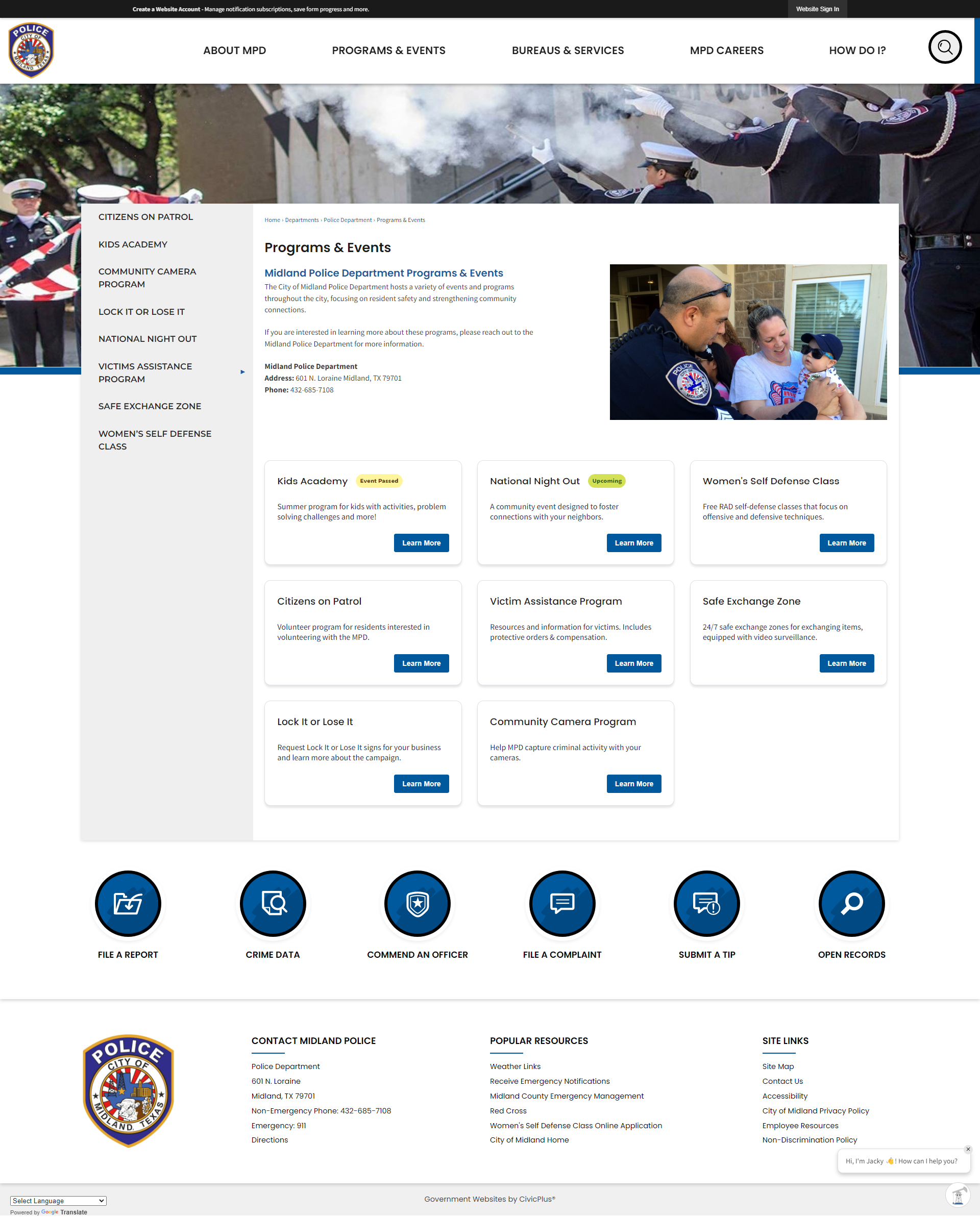
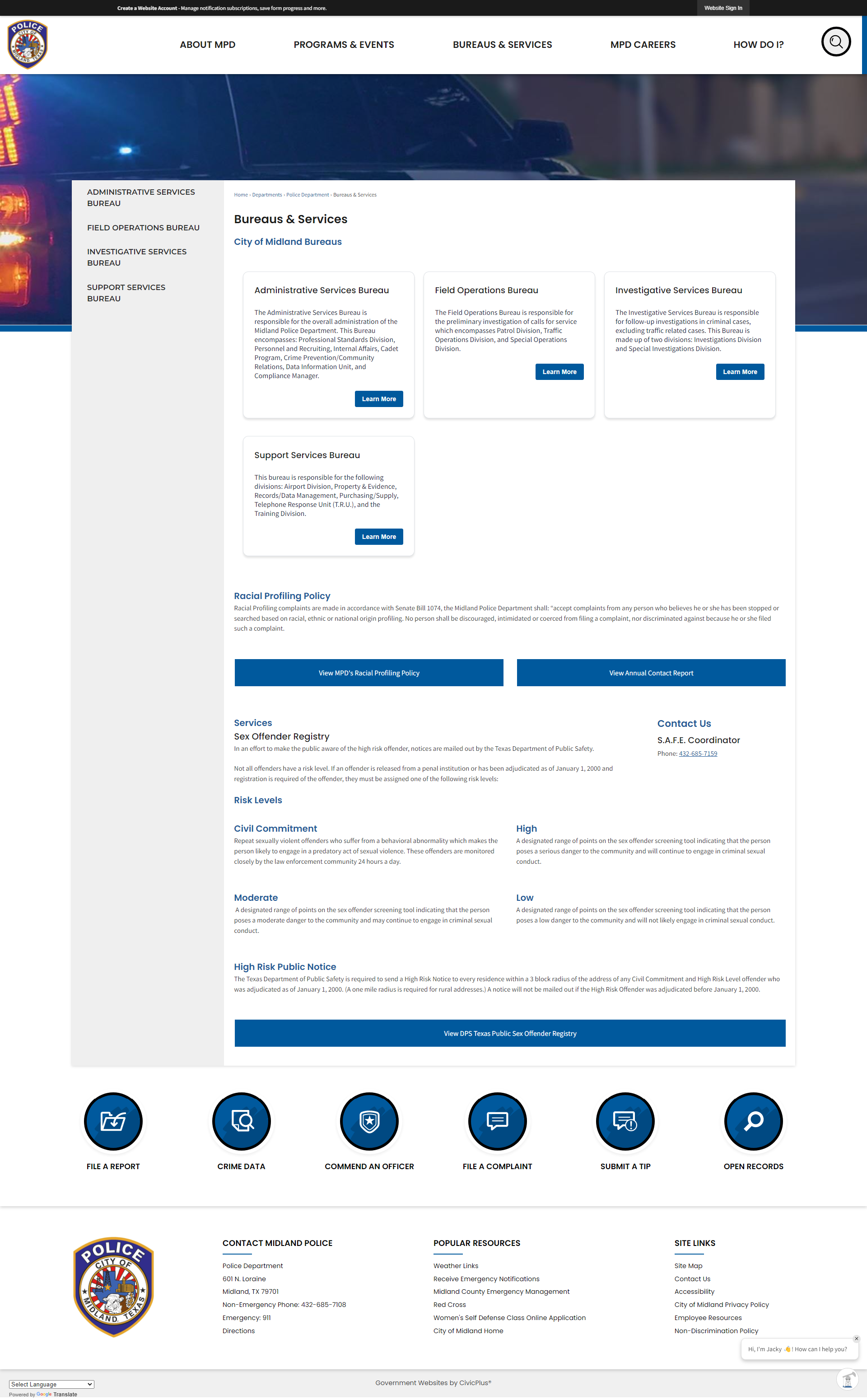
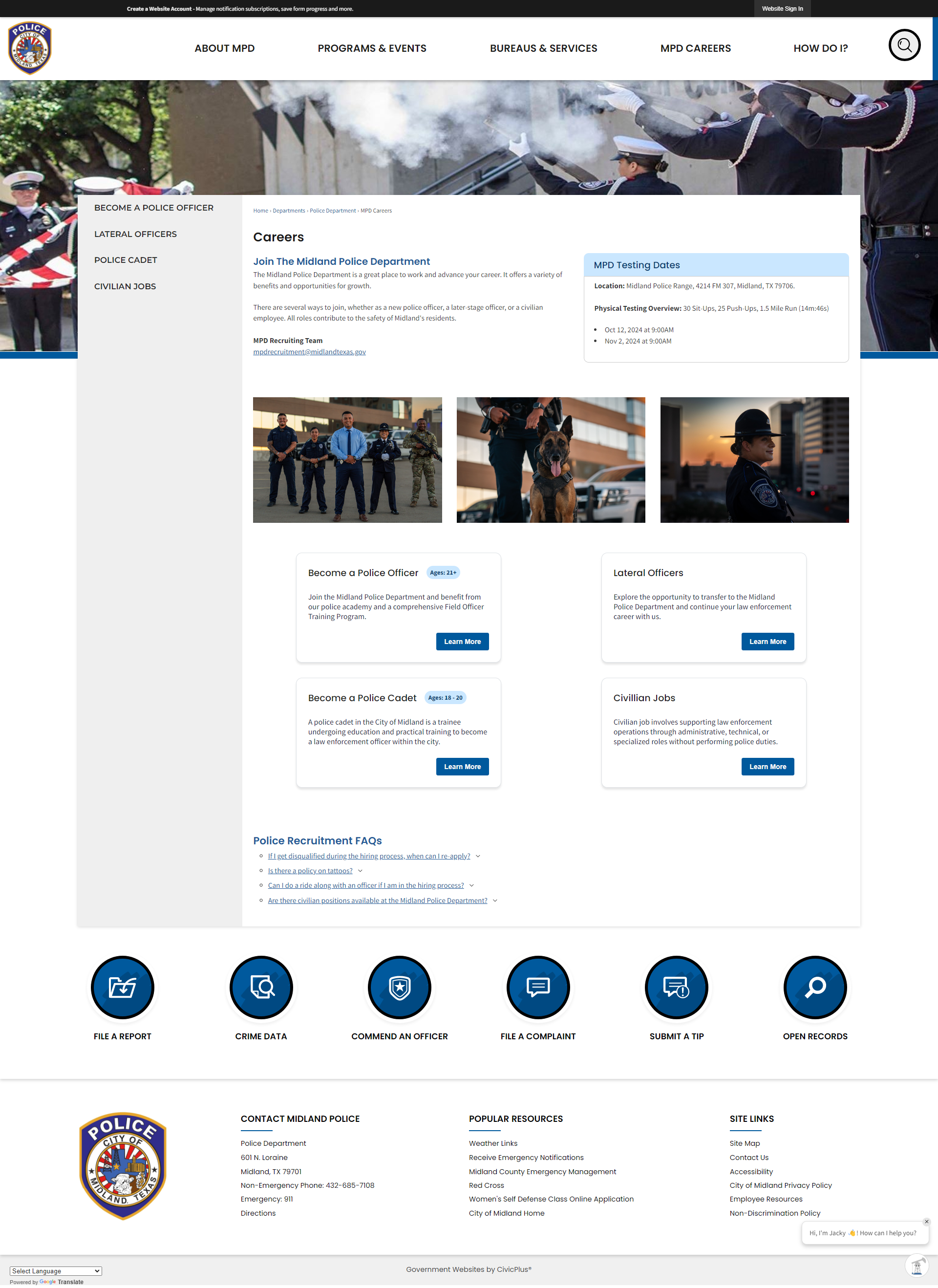
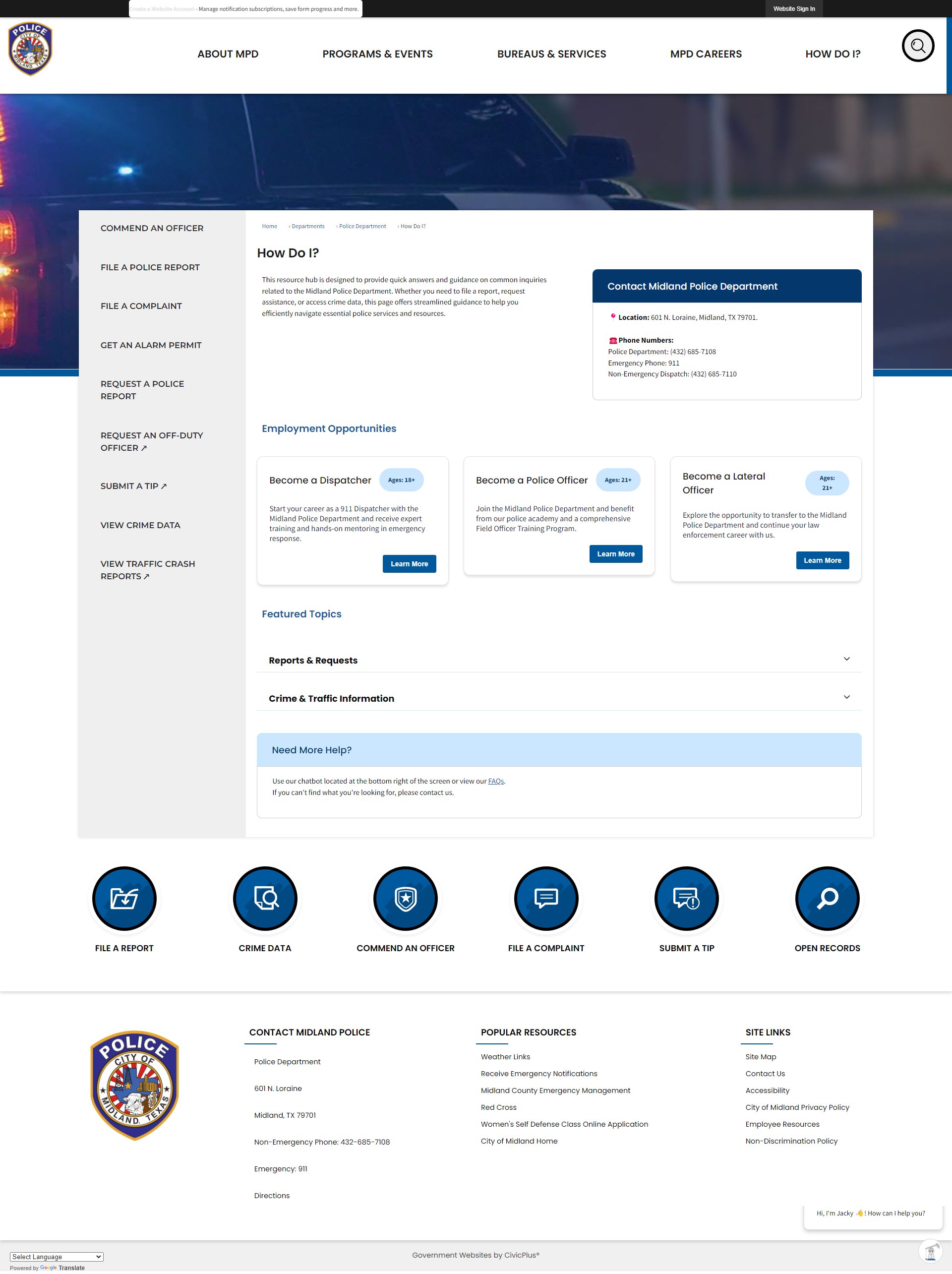
For various components of the project, we utilized Civic pre-built elements along with HTML/CSS to develop and implement the design features.
🔮 Future Enhancements
If I could go back in time to enhance the UX of the MPD website, I would consider the following improvements:
- Create two service blueprints / user journeys for different job positions.
- Research and implement successful components from other police department websites.
- Add a step-by-step recruitment process map for prospective candidates.